- Influence Weekly
- Posts
- Influence Weekly #434 - YouTube Overhauls BrandConnect With Gemini AI, Consolidating Creator Marketing Into Single Hub
Influence Weekly #434 - YouTube Overhauls BrandConnect With Gemini AI, Consolidating Creator Marketing Into Single Hub
TikTok Unveils New Ad Suite At IAB NewFronts, Including Logo Takeover, Prime Time Formats

Nii Ahene
March 27, 2026
Spotlight Stories
YouTube Overhauls BrandConnect With Gemini AI, Consolidating Creator Marketing Into Single Hub
TikTok Unveils New Ad Suite At IAB NewFronts, Including Logo Takeover, Prime Time Formats
LinkedIn Expands Creator, Video Ad Tools As B2B Marketers Demand Greater Scale
Snapchat Introduces AI Clips Format In Lens Studio
In Talent Management? This Webinar is For You
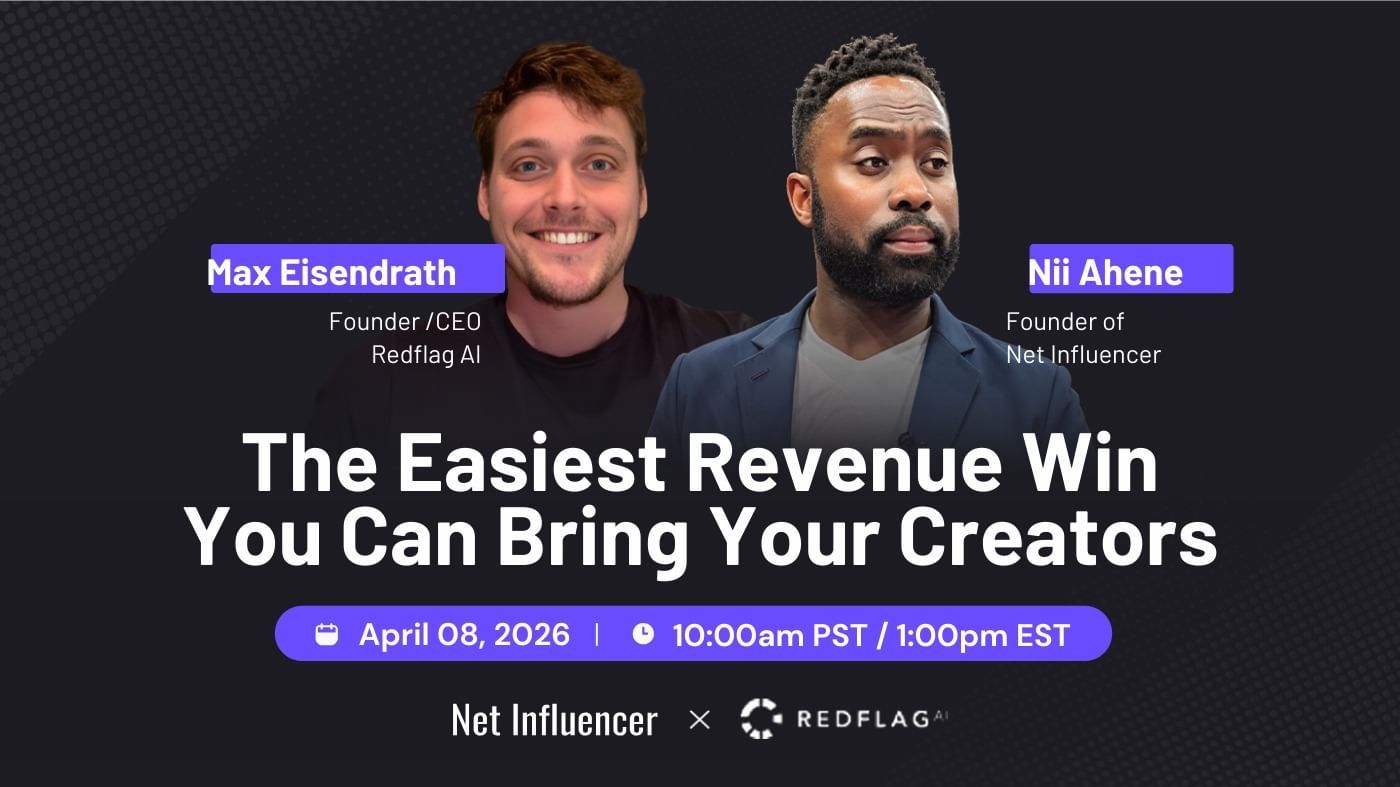
We're hosting a live session on April 8th with Redflag AI on a topic most talent managers haven't thought through yet: the revenue sitting in unauthorized clips, compilations, and reuploads of your creators' content.
The short version: every time a creator publishes long-form content, clips show up across YouTube, Facebook, and other platforms within hours. Some of those clips help with discovery. Others are monetized by strangers collecting ad revenue on your talent's work.
Redflag AI works with YouTube and Facebook to identify that content and recover revenue back to the creator. They started doing this for entertainment studios and sports leagues. Now they're bringing the same infrastructure to creators.
In 45 minutes we'll cover:
- What the unauthorized content landscape looks like for a typical 1M+ subscriber channel
- The difference between a takedown and a revenue claim (and when to use each)
- How talent managers are positioning this as a value-add for their roster
This is relevant if you manage talent doing long-form YouTube, podcasts, or any content that gets clipped regularly.
Great Reads
Braden Blacker, the 19-year-old CEO of Los Angeles-based influencer marketing agency The Content Code, launched the company at 17 after starting creator management at 14. The three-year-old agency combines social media management, influencer marketing, and talent management for clients including Sports Illustrated Predict, Rainbet, and Chalkboard.
Blacker argued that follower count no longer determines campaign success, prioritizing audience demographics, engagement rates, and content shareability instead. He said this shift created a "race to the bottom" for mid-tier and micro-influencers competing with user-generated content creators and affiliate partnerships.
The agency executed a campaign for Sports Illustrated Predict in June 2025 featuring FaZe Clan members, retired NBA players including Dwight Howard and Iman Shumpert, with performances by Ty Dolla $ign and Yung Gravy. The campaign generated nearly 200 million views and an estimated $5 million to $10 million in earned media value. The agency recently hired Aaron Kirschenberg as president, who previously served as head of talent at Fixated.
Roblox announced it will begin taking a revenue cut from brand deals negotiated directly between creators and advertisers starting January 2027. Previously, creators kept 100% of brand integration revenue, which typically ranges from $400,000 to over $1 million per campaign.
The rollout begins April 15, 2026 with beta registration tools, followed by mandatory deal registration in May and full revenue sharing implementation in 2027. Roblox has not disclosed the exact percentage it will collect, stating it is "finalizing details with creators" for Q2 2026 publication.
The gaming platform argued the change would create price transparency and eliminate a "race to the bottom" in creator pricing. However, creators responded with swift opposition. KreekCraft called it "insanely anti-creator" and compared it to "YouTube taking a cut of creator sponsorship money."
The policy change occurs as Epic Games' Fortnite offers creators 100% of item-sale revenue through early 2027. Roblox reported Q4 2025 revenue of $1.42 billion but posted net losses of $318 million for the quarter.
YouTube rebranded its BrandConnect creator-brand sponsorship tool as Creator Partnerships on March 24, launching an AI-powered platform that uses Google's Gemini models to streamline influencer discovery and campaign management. The platform analyzes billions of data points including brand mentions and subscriber growth to match advertisers with YouTube creators through natural-language queries in Google Ads and Display & Video 360.
Creator Partnerships integrates YouTube Studio, Google Ads, and DV360 into a single hub with unified measurement combining paid ad and organic creator content performance data. YouTube made the platform available via API to marketing agencies and SaaS platforms, with CreatorIQ among the early partners gaining access to first-party insights.
The launch included additional features like an enhanced Insights Finder report for creator discovery and Partnership Ads integration with DV360. YouTube plans to expand functionality to allow advertisers to input full campaign briefs for AI-powered creator recommendations based on campaign goals.
Latest Podcast
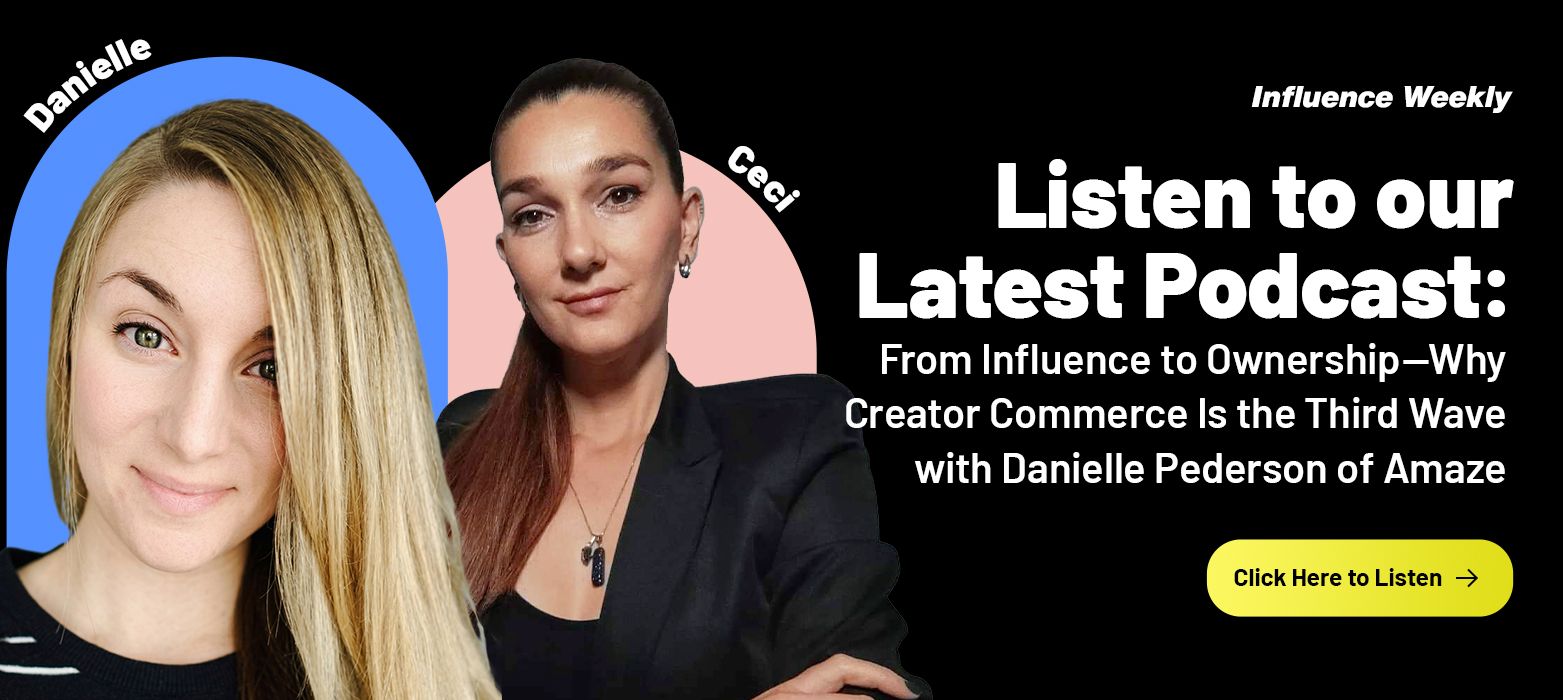
Ceci chats with Danielle Pederson, CMO at Amaze, to hear her perspective on three critical issues: why the creator economy is shifting from attention and brand deals into a third wave focused on ownership and equity, how engagement signals from fans translate into actual product opportunities that creators can capitalize on quickly, and what brands misunderstand when they over-index on reach instead of audience intent. Tune in for actionable guidance on building creator businesses with compounding value beyond one-time partnerships.
Campaign Insights
Tiltify, a Los Angeles-based fundraising infrastructure platform that connects creators with nonprofits, facilitated over $100 million in creator charitable donations in 2025, roughly double its 2024 total. The platform now serves over 8,000 nonprofits worldwide including St. Jude Children's Research Hospital and American Red Cross.
The top 30 fundraisers generated over $70 million collectively, with creators like Ryan Trahan raising $11.5 million through a 50-day vlog series and VTuber Ironmouse raising $1.37 million for the Immune Deficiency Foundation. Eight of the top 30 fundraisers were using Tiltify for the first time.
Interactive tools drove the record performance, with 40% of all donations tied to creator-designed incentives like auctions and matching challenges, up from 20% in prior years. The per-fundraiser average reached $1,344 in 2025, up from approximately $1,200 in 2024. First-time fundraisers averaged $1,665, nearly double the previous year's $882.
Adobe hosted its first Creator Live event in London, marking a shift from targeting traditional creative professionals to focusing on content creators working on social media platforms. Erin Boyce, Senior Director of Creator Product Marketing, said the company developed a "laser focus" on content creators who produce content daily and manage their businesses independently.
The event provided networking opportunities for creators to learn about audience growth and brand partnerships, differentiating from Adobe's traditional MAX conference. Adobe launched mobile versions of Photoshop and Premiere Pro in 2024 to serve this audience, offering free mobile apps without trial requirements.
Adobe positioned itself against competitors like Canva by leveraging its professional software heritage while making tools more accessible through streamlined interfaces and mobile platforms. The company views content creators as an expansion rather than a replacement of its professional user base, continuing to invest in traditional creative software while adapting products for faster-paced social media content creation workflows.
Niche fragrance brands adopted influencer marketing strategies as consumer discovery patterns shifted to social platforms, according to a March 2026 industry analysis. Creators With Benefit, an agency specializing in niche perfume influencer campaigns, reported that brands previously reluctant to work with creators now recognized authentic voices drive engagement.
The agency allocated campaign budgets across Instagram (40%), TikTok (40%), and YouTube (20%). TikTok evolved into a mainstream platform reaching all demographic groups since 2020-2022, with engagement rates exceeding Instagram by 2026. A 2026 Reech study of 400 French advertisers found 69% planned to increase influencer marketing budgets.
Seeding emerged as a popular format where brands send free products to influencers without posting obligations. Individual creators built substantial followings, including @monsieurparfum_off with 575,000 combined followers across platforms. Technology platform Kolsquare introduced AI-powered semantic search and audience sentiment analysis tools. The shift enabled consumers to purchase discovery sets or travel sizes based solely on social media content, with some customers visiting stores with TikTok screenshots.
TikTok launched four new advertising formats at the IAB NewFronts on March 24, expanding its premium ad portfolio. The new solutions include Logo Takeover, which co-brands with TikTok when users open the app, providing exclusive first-impression placement. Warner Bros tested the format for its "Supergirl" theatrical release and reported double-digit improvements in brand awareness and purchase intent.
Prime Time delivers up to three sequential ads from one advertiser to the same user within a 15-minute window during high-engagement periods. TopReach bundles existing TopView and TopFeed placements into a single purchase to maximize daily reach during tentpole moments.
TikTok also expanded its Pulse ad suite with Pulse Mentions, which places ads alongside content where users discuss brands or categories, and Pulse Tastemakers, allowing advertisers to align with selected creators. The announcements come as research shows consumer mobile app brands allocate an average of 19% of their search and social budgets to TikTok, according to a February Haus study.
MAC Cosmetics launched on TikTok Shop on April 2, 2026, becoming the first beauty brand in the UK to offer affiliate opportunities to all staff members. The Estee Lauder-owned company equipped its stores with mini studios for makeup artists to host live shopping tutorials, with participants receiving a percentage of sales they generate through the platform.
The program began with broadcasts from MAC's Carnaby Street location in London. Staff can opt into the affiliate model to earn commissions on products sold during their live demonstrations. MAC operates more than 230 standalone shops and concessions across the UK.
TikTok Shop, which entered the UK market in 2021, has attracted retailers including Marks & Spencer and Sainsbury's to its marketplace. Beauty sales on the platform increased 60% year-over-year in 2025, driven by trends like Korean skincare. The move represents MAC's strategy to blend social commerce with physical retail locations.
LinkedIn launched new B2B advertising products targeting marketers seeking broader creator reach. The platform introduced Top Voices 360, a premium sponsorship tier that builds on its "Shows by LinkedIn" product, allowing advertisers to sponsor editorial shows with BrandLink ads and extend to co-branded posts and events.
The program features eight creators including Meghana Dhar, Corporate Natalie, and Ramit Sethi hosting new show seasons. IBM renewed its sponsorship under the format, with Chief Communications Officer Sarah Meron citing measurable results from awareness to lead generation.
LinkedIn expanded BrandLink capabilities by adding six global publishers including Axel Springer, Reuters Japan, and TIME to its network of over 40 media outlets. The platform integrated Stripe for creator payments and made BrandLink campaigns available as self-serve options for select customers.
The company partnered with The Trade Desk to offer programmatic Connected Television ad buying powered by Microsoft Monetize, allowing LinkedIn's professional targeting on premium TV inventory. LinkedIn's research found 82% of B2B marketers consider creator campaigns essential for ROI.
Regional businesses found success with influencer marketing by prioritizing local authenticity over follower count, according to a March 2025 analysis. Companies discovered that creators with 15,000 followers concentrated in a single metro area delivered better results than those with 200,000 scattered followers nationwide.
The strategy focused on audience-market fit, where businesses partnered with creators whose followers could physically visit locations. Restaurant groups in Charlotte, fitness chains in Denver, and home services companies in Phoenix used this approach to reach geographically relevant audiences with minimal wasted reach.
Location-tagged content emerged as a key tactic, creating discoverable posts that continued driving awareness months after publication. Event-based activations at grand openings and seasonal launches produced organic content that resonated with local audiences.
Regional businesses measured success through foot traffic increases, local search volume growth, Google Maps direction requests, and booking spikes rather than traditional online conversion metrics. Companies that adopted strategic influencer partnerships with proper creator vetting and measurement frameworks consistently outperformed competitors using only traditional local advertising methods.
Analytics firm Stream Hatchet reported that live streaming platforms became a leading marketing channel for iGaming brands in January 2026. Stake dominated with 6,600 stream title mentions across Twitch and Kick, representing 60% of all iGaming brand mentions, while 1XBet recorded 1,800 mentions.
Stream Hatchet attributed Stake's dominance to structural ties with Kick, the streaming platform co-founded by Stake's backers. The top 10 iGaming creators by watch hours all streamed on Kick, led by Trainwreckstv with 15.6 million hours watched.
Among U.S.-focused betting brands, prediction markets Polymarket and Kalshi generated 12,000 and 11,700 chat mentions respectively, outpacing FanDuel's 8,800 mentions. Both companies expanded into the U.S. market in late 2025, with Kalshi raising more than $1.3 billion in funding rounds.
The growth occurred amid mounting regulatory pressure, with Brazil banning influencers from betting promotions and South Africa enforcing similar restrictions.
LTK, a creator commerce platform, launched Quick Collabs in March 2026 to streamline brand-creator partnerships. The tool allows brands to post flat-fee collaboration offers that creators can accept directly without lengthy contracts or approval processes. Brands can launch campaigns in minutes while creators receive payment within 48 to 72 hours of posting.
The feature operates through LTK's Brand Platform, which the company opened free to brands in September 2025. Since that launch, more than 1,200 brands joined the platform. The free tier includes creator discovery, direct messaging, gift sending, analytics access, and campaign posting capabilities.
LTK's launch addresses growing demand for creator partnerships. A joint study by LTK and Northwestern University published in September 2025 surveyed 204 senior marketing decision-makers at companies with revenues exceeding $10 million. The research found creator marketing ranked as the top investment priority for CMOs in 2026, ahead of AI-driven search, paid social, and paid search advertising.
JD.Com reported that over 70,000 vendors used its digital human hosts for live-streamed e-commerce sales, the Chinese internet giant announced at an AI progress conference. The company, which operates China's second-largest e-commerce platform, said digital human hosts now cost one-tenth the price of real hosts and generated tens of billions of yuan in gross merchandise volume last year.
JD.Com made these AI avatars free to all merchants in December 2024. Company executives said merchants want digital humans to become more realistic and interactive to increase viewer engagement during livestreams.
The Beijing-based company also announced plans to build what it called the world's largest embodied intelligence data collection center. The project will involve more than 100,000 employees and up to 500,000 external participants from various industries. JD.Com aims to collect five million hours of real-world human-scene video data within one year and over 10 million hours within two years, plus one million hours of robot body data. Its JoyInside embodied intelligence brand has partnerships with nearly 100 home appliance and furniture brands and over 40 robotics and AI toy brands.
Interesting People
Democratic presidential hopefuls are overhauling their media strategies, prioritizing content creators and podcasters over traditional press. During his recent book tour, California Governor Gavin Newsom conducted 18 of 22 interviews with creators across Snapchat, YouTube, Twitch and TikTok. Pennsylvania Governor Josh Shapiro hosted 10 content creators and called online voices "critical" to his reelection.
Illinois Governor JB Pritzker sat with creators alongside national press, while Maryland Governor Wes Moore appeared on Dan Le Batard's podcast to discuss his youth and military school. The shift follows lessons from Trump's 2024 campaign, which leaned heavily on creators to amplify messaging. Strategists say the fractured media landscape now demands candidates meet voters on nontraditional platforms, though a combined approach with legacy media remains essential.
456 Growth, a New York-based creator economy agency, expanded its business model around TikTok Shop commerce after identifying creators driving millions in gross merchandise value without management infrastructure. The company, founded in January 2022 by Dan Albert, operates three divisions employing over 50 staff across the U.S. and Latin America.
456 Growth signed over 200 TikTok Shop social sellers who were collectively generating $2.5 million to $3.5 million in monthly GMV. Within three months of providing management services, the agency secured $300,000 to $500,000 in monthly partnership deals for these creators. The agency processes 7,000 daily brand emails across 55 creators to identify collaboration opportunities.
The company restructured its 300-creator roster by commerce function rather than traditional influence metrics, creating divisions for TikTok Shop sellers, Amazon affiliates, and UGC producers. Albert cited specific campaign results including a Korean skincare brand generating $5 million in TikTok Shop GMV over 16 months, followed by $100,000 in Amazon sales within 30 days of launching an affiliate program.
Brands are shifting spending from mega-influencers to micro and nano creators with smaller audiences. Over 25 percent of UK brands plan to increase partnerships with "key opinion leaders" next year, according to Kolsquare's report. Companies cited declining consumer trust in mega-influencers as a driving factor.
Micro-influencers like Georgia Walkden and Jourdan Harland, who each have around 50,000 followers, are securing deals with smartphone brands and outdoor retailers. Nano influencers with under 10,000 followers increased their share of brand spending to 9 percent in the first quarter, up from 2.5 percent previously, while spending on hero and mid-tier influencers fell 50 percent according to WPP's The Goat Agency.
Marketers value micro-influencers' authenticity and targeted engagement over reach. Brands including Amazon Prime, Calvin Klein and Puma spent over $30 billion on sponsored posts last year with major celebrities like MrBeast, Kylie Jenner and Cristiano Ronaldo.
Bonkers Toys, a San Diego-based toy company, has built its business model around licensing digital creator content for physical products. The company previously launched toy lines for properties including slither.io, Ryan's World, Skibidi Toilet, PrestonPlayz, and Warrior Cats. Lisa Berlin Wright, Head of Licensing at Bonkers, joined the company in 2023 after two decades in traditional entertainment licensing.
Wright spoke at Kidscreen Summit 2026, discussing how creator licensing differs from traditional studio licensing. She noted that creator audiences can scale rapidly, but physical product development still requires 18-month timelines for design, manufacturing, and retail placement. This creates timing mismatches between viral content and shelf availability.
The company recently announced licensing deals for Gorilla Tag, a popular VR game, and launched a product line for YouTube channel Genevieve's Playhouse. Wright emphasized that successful digital properties for licensing typically demonstrate sustained audience growth across multiple platforms rather than single-platform viral moments.
Attorney Michelle May O'Neil advised creators at SXSW 2026 to include social media accounts in prenuptial agreements during her panel "Who Owns Me? Legal War Over Identity in the Creator Economy." O'Neil, who specializes in name, image, and likeness law, cited the case of married influencers Kat and Mike Stickler, who fought over custody of their 4 million followers during their divorce.
O'Neil warned that family courts lack legal precedent for dividing social media assets, noting "there's no legal doctrine for this." She recommended prenup clauses stating each spouse maintains exclusive rights to their name, image, and likeness, preventing automatic transfer of these rights through marriage.
O'Neil also suggested creators establish LLCs or other legal entities to protect their identity as a business asset before marriage. The attorney emphasized that creators should retain ownership of content featuring their likeness, even if romantic partners appear in their videos, to prevent unauthorized future use after breakups.
Social media influencer Alix Earle, who has 14 million followers across TikTok and Instagram, launched skincare brand Reale Actives on March 24, 2026. The 25-year-old developed the acne-focused skincare line with Imaginary Ventures, led by CEO Andrea Blieden, formerly of Kiehl's and Body Shop.
Earle previously earned equity stakes in brand partnerships, including with Poppi, which sold to PepsiCo for $1.95 billion. She appeared in four Super Bowl commercials and spoke twice at Harvard Business School about influencer marketing strategies.
The brand launch employed attention-economy tactics spanning months. Earle showed unlabeled products in her content background and created an Instagram account called "wtfisalixdoing" to build anticipation. The account transformed into the brand's official page and gained over 500,000 followers. She appeared on The Tonight Show with Jimmy Fallon to announce the launch.
Earle told Fortune in December 2025 that she rejected opportunities to join existing brands, preferring to build from scratch. The skincare line targets acne-prone women seeking products that are functional yet aesthetically appealing for display.
Industry News
Amazon launched a principal-level creator business development role with base salaries ranging from $165,800 to $246,700, seeking candidates with 7+ years in creator economy sectors and experience driving multi-million dollar partnerships. Google opened a YouTube Creator Lead position focused on transforming Partnership Ads from experimental to essential client offerings, with salaries ranging from $124,000 to $180,000 across multiple U.S. locations.
Warner Music Group established an Associate Director role for creator partnerships at $95,000-$105,000, requiring 4 days per week on-site in Los Angeles or New York. American Eagle hired for TikTok Shop marketplace management, while Banana Republic sought senior influencer marketing leadership at $144,200-$191,100.
Substack expanded internationally with UK support roles at £57,000-£70,000 and full-stack engineering positions at $140,000-$260,000. Fanvue, reporting $100M+ annual recurring revenue, recruited commercial leads for creator acquisition. The hiring surge demonstrates enterprise adoption across tech companies, entertainment conglomerates, and retail brands expanding creator-focused operations in March 2026.
Copenhagen-based SureShot launched iOS and Android apps in August 2024 to collect fan-filmed video from live events and organize it through AI-assisted curation. The platform, co-founded by Nicolai Amter with backing from Danish venture firm Soundinvest and private equity investors, generates PIN codes for event organizers that allow attendees to upload footage directly to SureShot's backend system.
Event organizers access a web portal to review content and create highlight reels, which can be sent back to contributors. The company has secured partnerships with several Danish festivals for summer 2026 and established a deal with Royal Unibrew, gaining access to events sponsored by the brewing company's brands.
SureShot uses AI to identify usable moments from submitted footage but does not generate synthetic content. The platform targets music festivals, brand activation events, sports, and corporate events where audiences already film extensively. Amter, who spent two decades in television production for MTV, Disney, and National Geographic Channel, sees the service addressing revenue challenges artists face from streaming platforms by monetizing crowd-sourced content.
Snap launched AI Clips in Lens Studio on March 25, 2026, a feature that converts single photos into five-second AI-generated videos. The tool is available exclusively to Lens+ subscribers through Snap's GenAI Suite, allowing developers to build photo-to-video AI experiences without external tools.
AI Clips uses a closed-prompt system where developers define creative direction when building a Lens, while users activate the experience with a single tap. Developers enrolled in Lens+ Payouts can earn revenue directly from AI Clips experiences they publish.
The launch represents Snap's latest addition to its AI video tools suite. In March 2025, Snap introduced its first AI video Lenses for Platinum subscribers. In December 2025, the company launched "Animate It," an open-prompt video generation tool, and "Quick Cut," which assembles beat-synced videos from users' Memories.
Snap faces competition from TikTok's AI Alive feature, Meta AI's image-to-video generation, and YouTube Shorts' photo-to-video AI tool that creates six-second videos.
The Goat Agency, a WPP Media-owned influencer marketing firm, hired Bryce Adams as U.S. Influencer Lead in March 2026. Adams joined from Open Influence, where he served as Senior Vice President of Partnerships, and previously spent six years at Captiv8 leading brand strategy.
Adams will report to Global President Alex Burgess and lead the agency's continued U.S. expansion under its "Influence Everywhere" mission launched in 2025. The initiative aims to scale influencer content across more markets, platforms, and media placements using AI and Goat's proprietary data technology called IBEX.
The Goat Agency currently employs more than 750 people across 41 markets and has maintained a U.S. presence since 2019. WPP acquired the agency in 2023 as part of GroupM, now rebranded as WPP Media. The agency's clients include Dell, EY, Proximo Spirits, Ragú, and Spectrum Brands. The hire comes as the creator marketing industry grew approximately 36% last year according to the IPA.
Pinterest launched "Promote a Pin" in March 2026, allowing creators and small businesses to boost existing pins without prior advertising experience. The feature began rolling out to U.S. users and mirrors similar tools from competitors like Meta's "Boost Post" and TikTok's "Promote" feature.
Pinterest reported 619 million monthly active users and over 80 billion monthly searches, with roughly half carrying commercial intent. Chief Business Officer Lee Brown said the tool removes barriers for businesses of all sizes to reach audiences and grow on the platform.
The launch aligns with a broader platform shift toward using organic content as the foundation for paid campaigns. Pinterest also tested "Performance+ Catalog Sales" campaigns through its Shopify integration, allowing merchants to launch ads directly from their storefronts.
Pinterest cited that 80% of businesses on its platform report higher customer interest and engagement compared to other platforms. The feature utilizes Pinterest's "Taste Graph" AI model, which matches content with users based on preferences rather than social connections.
Launchd acquired Auckland-based talent agency WeAreTENZING in March 2026, adding more than 100 athletes, content creators, and artists to its portfolio spanning Australia and New Zealand. Financial terms were not disclosed. WeAreTENZING will continue operating under its existing brand, led by CEO Dan Sing.
WeAreTENZING represents talent including Olympic medallist Ruby Tui, Jazz Thornton (2021 Young New Zealander of the Year), and creators Louis Davis, HowToDadNZ, and ManCanCook. The agency, founded in 2016, initially focused on athlete career transitions before expanding into sport, entertainment, and social media careers.
The acquisition extends Launchd's 2025 buying spree, which included Brisbane-based Huume and Sydney-based Hoozu from IZEA, plus speaker bureau ICMI. Combined acquisitions give Launchd connections to more than 5,000 talent across categories, supporting over 100,000 annual activations.
Australian influencer marketing spend reached AUD $830 million over the past 12 months, up 13.5% year-over-year, according to Meltwater and We Are Social.
The Creators Guild of America launched an open beta version of Mosaic, a credentialing platform that functions as an "IMDb for creators." The platform allows digital creators and behind-the-scenes crew to showcase verified work history to collaborators, brands and audiences.
Mosaic requires third-party verification for all submitted credits and follows CGA's professional eligibility standards. For individual influencers to receive credits, they must have been paid by brands, agencies, platforms or maintain a paid subscriber base of at least 10 people. The platform assigns each participant a unique Creator ID for use across social media platforms.
The service launched free to all creator economy workers, though only CGA members can receive human creator verification. Several thousand beta testers signed up prior to Tuesday's launch. CGA cited the rise of synthetic creators and deepfake videos as factors that accelerated development of the verification system, though the platform concept predated recent AI developments.
Dentsu X launched The Creator Catalyst, a framework designed to help brands build structured creator marketing systems rather than treating creators as individual channels. The agency media unit released the playbook on March 23, addressing what WARC research identified as a problem for 60% of marketers who struggle to identify creators that fit their brands.
The framework operates through three components: casting, culture, and commerce. Casting uses Dentsu's Creator & Trends Studio (CATS), an AI-powered platform developed with Meta and Google, to select creators based on data rather than reach metrics alone. The culture component integrates creators into early creative development rather than distribution phases.
Dentsu cited its Consumer Navigator research showing 82% of Millennials and 85% of Gen Z engage with creator content. The company referenced WARC projections that the creator economy will reach $528 billion globally by 2030. Dentsu's research found influencer-led content captures 73% more attention than brand-led advertisements. The launch supports Dentsu's existing Dentsu Influence platform for managing creator partnerships.
Movers+Shakers, the Los Angeles-based creative agency, appointed three senior executives in March 2026 to support its expansion as brands increase social-first marketing investments. The agency named Jarrod Bull as SVP of Business Partnerships, Petur Workman as VP of Business Development, and Sam Schaitberger as VP of Strategy.
Bull brings over 20 years of experience from roles including Managing Director at Yard NYC and Managing Partner at Code and Theory, where he helped grow the agency from 30 to 300 employees. He most recently served as Head of AI at StrawberryFrog.
Workman has over 15 years of marketing experience and has cultivated relationships with more than 2,500 global executives at companies including Delta Air Lines, Novartis, Ralph Lauren, and AT&T. Schaitberger brings 15 years of social-first strategy experience from senior roles at Edelman and MullenLowe, working with brands including Apple, Grey Goose, and Caesars Entertainment.
Movers+Shakers counts e.l.f. Beauty, SharkNinja, Adobe, and Hilton among its current clients.
LinkedIn rolled out a new Feed ranking system powered by large language models and graphics processing units, replacing its previous multi-source architecture for its 1.3 billion members. The company announced the change in a March 12 engineering blog post.
The previous system pulled content from multiple specialized sources including chronological network activity, trending posts by geography, and collaborative filtering systems. LinkedIn replaced this with a unified retrieval system using LLM-generated embeddings that can infer member interests from profile data alone, addressing cold-start scenarios for new users with limited engagement history.
Technical improvements included converting raw engagement counts into percentile buckets, which produced a 30x increase in correlation between popularity signals and embedding similarity. The change improved Recall@10 accuracy metrics by 15%. LinkedIn also built a Generative Recommender model that processes more than 1,000 historical interactions to identify temporal patterns in member behavior, treating feed history as an ordered sequence rather than independent events.
Facebook launched its Creator Fast Track program on March 19, targeting established creators from Instagram, TikTok, and YouTube with guaranteed monthly payments and expanded content reach. Creators with at least 100,000 followers on these platforms receive $1,000 monthly for three months, while those with over one million followers earn $3,000 monthly. The program bypasses Facebook's standard eligibility requirements and grants immediate access to Facebook Content Monetization.
The announcement coincided with Facebook reporting $3 billion in creator payouts for 2025, representing a 35% increase from the previous year and the platform's highest annual total. Reels accounted for 60% of total payouts, with the remaining distributed across Stories, photos, and text posts. The number of creators earning more than $10,000 annually on Facebook grew by over 30% year-over-year.
Facebook also introduced three new monetization metrics: Qualified Views, Earnings Rate, and Non-Qualified Views to help creators understand their revenue potential and performance requirements.
Registration Required
A Los Angeles jury found Meta and YouTube negligent in a landmark trial, ruling their apps were designed to be addictive and harmful to children. The jury awarded plaintiff Kaley G.M. $6 million in compensatory and punitive damages. The case bypassed Section 230 protections by targeting app design rather than user content, making it a bellwether for more than 3,000 similar lawsuits pending in California. Both companies plan to appeal.
The verdict follows a separate New Mexico jury ruling Tuesday that hit Meta with a $375 million penalty for failing to protect minors. For platforms and creators alike, the rulings signal a major shift in how courts view social media's responsibility to young users.
Amazon-backed startup Spotter released a report identifying approximately 6,600 "creator TV" channels in the US that produce long-form episodes of 22+ minutes with consistent release schedules. These channels generated an estimated 26 billion hours of US viewing in 2025, with more than half watched on connected TVs.
Spotter works with YouTube creators including Kinigra Deon and the Jordan and Salish Matter team, licensing content and connecting brands with creators. The company estimated creator TV shows carry about 2.4 minutes of ads per half hour, less than traditional linear and streaming television ad loads.
A wave of AI-generated TikTok videos featuring anthropomorphic fruits in melodramatic love affairs has become one of the platform's most viral trends. The videos, which depict produce characters cheating, breaking up and even having babies, first emerged in late February and have since crossed into mainstream attention. Pop star Zara Larsson and celebrity surgeon Dr. Miami both posted about the trend publicly.
Now creators are spinning the phenomenon analog. Influencer Haley Kalil spent four hours recreating the genre with face paint and cardboard fruit masks, while college student Jacie Tottleben used markers and real produce. Content creator Caroline Deery points to escapism as the engine behind the trend's spread, calling the videos a reprieve from heavy news cycles on the platform.
Veteran podcasters are walking away from their shows as celebrity competition and video demands reshape the industry. The Try Guys ended their flagship "TryPod" last November, citing an inability to monetize despite hundreds of thousands of listeners. "KFC Radio" host Kevin Clancy at Barstool Sports wrapped his 12-year run in December after A-list guests migrated to celebrity-hosted shows.
Marc Maron closed "WTF" in October after 1,686 episodes. Nearly half of all podcast ad revenue now flows to just 500 shows, according to Magellan AI, while top-10 programs capture about 40% of weekly listenership. Available shows on Apple Podcasts have nearly tripled to 3 million since 2020, but the business model remains unstable as audio companies including Kast Media, Audacy and Cumulus have filed for bankruptcy.