- Influence Weekly
- Posts
- Influence Weekly #435 - How Cruise Influencers Are Making $350,000 Attracting Gen Z To Ships
Influence Weekly #435 - How Cruise Influencers Are Making $350,000 Attracting Gen Z To Ships
Instagram Begins Testing Premium Subscription Offering Stealth Story Viewing, Expanded Audience Lists

Nii Ahene
April 03, 2026
Spotlight Stories
YouTube Opens Creator Partnerships API To Third-Party Influencer Marketing Platforms
Meta Expands Threads Ad Capabilities With App Ads, Reply Moderation Tools
How Cruise Influencers Are Making $350,000 Attracting Gen Z To Ships
Instagram Begins Testing Premium Subscription Offering Stealth Story Viewing, Expanded Audience Lists
Upcoming Live Session
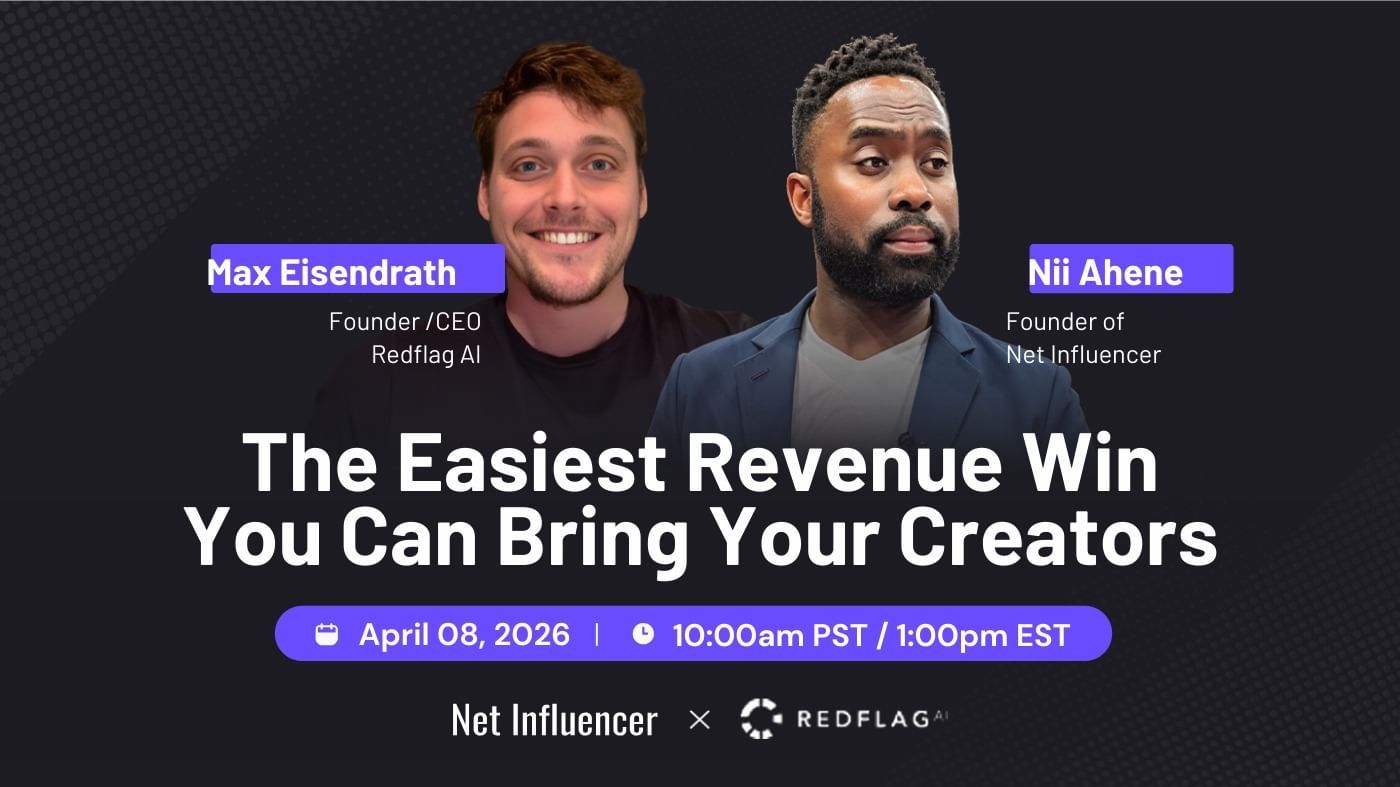
We're hosting a live session on April 8th with Redflag AI on a topic most talent managers haven't thought through yet: the revenue sitting in unauthorized clips, compilations, and reuploads of your creators' content.
The short version: every time a creator publishes long-form content, clips show up across YouTube, Facebook, and other platforms within hours. Some of those clips help with discovery. Others are monetized by strangers collecting ad revenue on your talent's work.
Redflag AI works with YouTube and Facebook to identify that content and recover revenue back to the creator. They started doing this for entertainment studios and sports leagues. Now they're bringing the same infrastructure to creators.
In 45 minutes we'll cover:
What the unauthorized content landscape looks like for a typical 1M+ subscriber channel
The difference between a takedown and a revenue claim (and when to use each)
How talent managers are positioning this as a value-add for their roster
This is relevant if you manage talent doing long-form YouTube, podcasts, or any content that gets clipped regularly.
Great Reads
YouTube expanded access to its Creator Partnership API to third-party influencer marketing platforms, allowing them to integrate first-party audience and campaign data directly into their tools. The company announced the broader rollout at the 2026 YouTube NewFronts. The API provides access to verified viewer data for creators in the YouTube Partner Program who enabled data sharing, including audience demographics, geographic distribution, and interest-based signals.
CreatorIQ, TRIBE, and Fabulate were among the first platforms to receive invite-only access. CreatorIQ released its integration in phases starting November 13, 2025, with Phase 2 launching January 22, 2026, adding structured workflows for paid partnership disclosures. Access remains invite-only through direct business relationships with no self-serve option available.
YouTube reported that creators who shared channel insights appeared 60% more frequently in brand search results. A TRIBE-managed campaign for supplement brand Thorne found that creator-led Shorts delivered a 38% higher conversion rate than brand ads. The API connects to YouTube Studio for creators and Google Ads for advertisers, with creator discovery powered by Gemini across three million Partner Program creators.
RACER, a North American motorsports media platform, announced it will host its inaugural Creator Summit on April 16 in Long Beach, California, ahead of the Acura Grand Prix weekend. The invitation-only event will bring together digital creators, brands, racing teams, and media leaders for keynote presentations, panels, and networking sessions.
YouTuber Mickey Andrade will host the program, which includes a fireside chat between RACER Creator Network President Taro Koki and Net Influencer Publisher Nii Ahene. Additional speakers include creator Nicole Johnson, motorsports creator James Coker, and Acura Grand Prix General Manager Jim Liaw.
The summit will focus on platform navigation, brand collaboration strategies, and how motorsports reaches new audiences. Phiaro and HP Tuners are supporting the event, with the Acura Grand Prix listed as a partner. This follows RACER's launch of the RACER Creator Awards in November 2025 during AutoMobility LA, recognizing automotive and motorsports content creators across digital platforms.
Dr Pepper licensed an unsponsored TikTok jingle from creator Romeo Bingham and aired it during the College Football Playoff National Championship game in January 2026. The campaign began when Bingham posted an original jingle about Dr Pepper in December 2025, prompting Social Element, Dr Pepper's social media agency, to comment within 24 hours.
The beverage company kept Bingham's original audio unchanged when adapting it for television. The campaign generated over 65 million views and 7 million likes on the original content, while Bingham's follower count grew from 300,000 to over one million. Dr Pepper reported a 14% increase in average daily TikTok videos and 31% growth in views compared to 2025 averages.
Social Element operates continuous comment section monitoring across Dr Pepper's social channels to identify trending content. The agency escalated the Bingham video based on early engagement metrics and competing brand interest. Lindsay Burstein, Senior Director of Integrated Social and Communications at Keurig Dr Pepper, said the company follows established creator principles that allow rapid decision-making without extensive approval processes.
The Big Three Podcast

In this Month’s Big Three Ceci Carloni sit down with Nii A. Ahene founder of Net Influencer, to hear his perspective on three critical issues: whether brands are moving beyond last-minute cultural moment activations : why measurement in creator campaigns remains structurally difficult to solve : and what it actually takes to scale whitelisting beyond a single boosted post. Tune in for a ground-level read on where the industry is putting its energy and where the gaps remain.
Campaign Insights
The International Olympic Committee named Khaby Lame, TikTok's most-followed creator with 162 million followers, as an official ambassador for the Dakar 2026 Youth Olympic Games on March 26. The Games will run from October 31 to November 13 across Dakar, Diamniadio, and Saly, marking the first Olympic sporting event held in Africa. The event expects to host approximately 2,700 athletes aged 17 or younger.
Lame was born in Dakar in 2000 before his family emigrated to Italy when he was an infant. As ambassador, he will facilitate attendance at the Games for children from Mbacké, his parents' hometown in central-western Senegal. He joins existing ambassadors including actor Omar Sy, footballer Kalidou Koulibaly, and Eva Neymar.
The appointment adds to Lame's institutional partnerships following his UNICEF Goodwill Ambassador designation in February 2025 and UN Tourism ambassador role in November 2025. Lame built his 360 million cross-platform following during the COVID-19 pandemic after losing his factory job, creating silent reaction videos to complicated life hacks.
Meta expanded Threads advertising capabilities through an updated Marketing API that launched March 30, 2026. The update introduced two new features for third-party developers and platform partners working with advertisers.
App ads became available for purchase on Threads globally through the API, supporting app install campaigns and app event optimization for link clicks or conversions. Advertisers can use existing image, video, or carousel creative assets without producing platform-specific content.
Pubblisher Media, an Indian influencer marketing agency, executed a nationwide campaign for Samsung's Galaxy S26 Ultra smartphone launch featuring 50 creators across entertainment, tech, and lifestyle categories. The campaign included creators Abhishek Malhan, Gurleen Pannu, Krithi Shetty, and Jiya Shankar among others.
The agency designed the campaign to provide creators exclusive access to the device through curated experiences, allowing them to capture first impressions and behind-the-scenes content in real time. Creators produced content in their individual storytelling styles while maintaining a unified narrative around the product launch.
Mohamed Asif, co-founder of Pubblisher Media, stated the campaign focused on translating the product's features into relatable experiences for audiences. The initiative reflects a shift in tech product launches from traditional announcements to multi-creator, experience-driven campaigns.
Top cruise influencers earned up to $350,000 annually in 2025 through sponsored voyages, brand partnerships, affiliate commissions and advertising revenue, according to Bloomberg. Royal Caribbean reported 19% growth in Gen Z customers in 2025, while Celebrity Cruises and Virgin Voyages led industry adoption of influencer marketing strategies.
Individual content deals range from £3,000 to £50,000 per campaign for mid-to-top tier creators, with cruise lines covering voyage costs valued between £1,500 and £15,000. Affiliate programmes pay creators 3-8% commission on bookings made through tracked links. A creator driving 100 annual bookings at £3,000 average value generates £9,000-£24,000 in passive affiliate income.
The global cruise market projected to reach $15.1 billion by 2028 benefits from visual content that generates high engagement rates. CLIA reported 76% of Gen Z cruise passengers plan to sail again, while 74% of cruisers said social media influencers impact destination choices, justifying premium advertising rates for cruise-related content over other travel categories.
Meta expanded its Facebook creator affiliate program with initial partnerships featuring Amazon in the U.S. and Shopee across eight Asian and Latin American countries, the company announced at Shoptalk 2026. Creators can now tag products from retail partners directly in Facebook posts and Reels, earning commissions when followers make purchases through clickable banners.
The program allows creators to connect affiliate accounts and unlock product tags that lead followers to partner retail pages. Partners set commission rates while Meta provides analytics tools showing creators which content drives sales. Instagram testing will begin this spring with the same initial partners.
Instagram creators with 1,000-plus followers and aged 18 or older can load up to 30 shoppable products per Reel using their own third-party affiliate links. Meta also launched one-tap checkout with PayPal, Stripe, Adyen, and Shopify partnerships, plus AI-powered browsing experiences for product discovery. The company cited data showing over half of shoppers rely on online influencers for purchasing decisions.
VidMob, a creative data company backed by Adobe with over $200 million in venture funding, launched Influencer Intelligence to analyze creator content performance. The platform analyzed more than 150,000 creator assets to identify creative patterns that correlate with performance outcomes.
The tool provides access to more than 80 creator-specific attributes for analyzing visual and narrative patterns including "day in the life" storytelling, "dupe" comparisons, and "before and after" transitions. An AI engine translates performance data into briefs for creators while a unified dashboard displays organic and paid campaign performance.
VidMob CEO Alex Collmer positioned the launch as part of the company's shift from identity data to creative data. The platform enables brands to identify which organic assets warrant paid amplification by linking specific creative decisions to performance outcomes across both organic content and paid media at the asset level.
YouTube announced new advertising tools at the IAB NewFronts designed to standardize creator marketing and make it resemble television buying rather than social media partnerships. The platform positioned its network of 3 million vetted creators as a scalable advertising channel, emphasizing that over half of YouTube viewing now occurs on TV screens.
The company launched AI-driven discovery tools that allow advertisers to find creators through prompt-based searches in Google Ads and DV360. YouTube also introduced an "open call" feature where brands can publish campaign briefs directly to creators for video concept responses.
YouTube reported that 80 percent of U.S. viewers return to the same creators repeatedly, while 40 percent of video views happen more than a month after publication. The platform expanded its measurement capabilities with brand pulse reports that track reach across paid, owned, and earned media, plus lift studies for awareness and conversion tracking.
Billion Dollar Boy, a creator marketing agency, partnered with financial infrastructure company Lumanu to integrate payment processing into its AI-powered Companion platform. The new "Creator Payments" feature consolidates vendor onboarding, tax compliance, and payment distribution into a single dashboard, automating up to 14 administrative actions per creator that were previously handled manually across finance, legal, and campaign teams.
The integration includes "Early Pay," which allows creators to receive payment outside standard invoice cycles. Lumanu, which has processed over $1.5 billion in creator payments for brands including DoorDash, PepsiCo, and Warner Music, provides the underlying payments and compliance infrastructure for secure local-to-local payments across global markets.
The partnership addresses payment delays that have plagued the creator economy, with some brand-agency arrangements stretching payment terms to 90 or 120 days. Research by Visa found that 30% of creators cite faster access to funds as a critical operational need. Creator Payments is available now within Companion.
Interesting People
Spanish-language news influencer Carlos Eduardo Espina earned $3 million in 2024 from content creation across TikTok, Instagram, Facebook, and YouTube, where he has accumulated 22.5 million followers. The 27-year-old law school graduate made $2.79 million in 2024, with over one-third from TikTok Shop product sales, one-third from brand partnerships including money-transfer app Sendwave, and the remainder from platform views.
Espina donated $400,000 and transferred $1 million to his nonprofit organization in 2024. His content focuses on immigration policy and breaking news, delivered in Spanish to Latino audiences who generated 7.2 billion views and 33 million comments annually on TikTok alone.
Pew Research Center ranked Espina among the top five news influencers Americans turn to regularly, alongside Tucker Carlson and Ben Shapiro. His rise coincided with Jorge Ramos departing Univision after nearly 40 years as an anchor. Espina spoke at the 2024 Democratic National Convention and recorded a video with President Biden at the White House in June 2024.
TikTok featured Cherie Kihato, founder of Kenyan furniture company Savannah Space, in its African All-Stars Series on March 30. The platform previously included Kihato on its Global TikTok Discover List.
Kihato discussed her content creation strategy for balancing business management with social media presence. She dedicates one hour each morning to content creation and maintains a fixed daily schedule with advance planning. Kihato measures content impact through direct audience messages rather than platform metrics.
The entrepreneur positioned her content as part of broader African narrative ownership, focusing on showcasing African craftsmanship and culture. She waits to process personal challenges before sharing them publicly rather than posting in real time. Kihato advised creators to "be unapologetically yourself" and called for more African women to share business risks alongside outcomes.
Alex Cooper's Unwell Network launched its first original competition series, marking the podcast host's expansion into self-produced content. "Unwell Winter Games" premiered April 6 on YouTube with four episodes featuring 16 reality TV stars and influencers competing in Park City, Utah.
The cast included Dakota Mortensen from "The Secret Lives of Mormon Wives," who faced domestic abuse allegations from ex-girlfriend Taylor Frankie Paul that led ABC to suspend "The Bachelorette" Season 22. Other participants included Demi Engemann, a "MomTok" influencer who left "Mormon Wives" after controversies including a defamation lawsuit, and Anna Delvey, the convicted fraudster.
Cooper co-founded parent company Trending in 2024 with husband Matt Kaplan. The series was shot in winter 2025 and received Utah film incentives. Unwell continues developing content with premium partners including "Love Overboard" on Hulu and "Let's Marry Harry" on Netflix.
OnlyFans owner Leonid Radvinsky died from cancer at age 43, leaving his widow Yekaterina Chudnovsky with controlling interest in the adult content platform through a family trust valued at $5.5 billion. Chudnovsky, a mother of four and lawyer for an unnamed technology firm, now controls the company that generated $7.2 billion in revenue in 2024 with only 42 employees.
OnlyFans takes a 20% cut from approximately 4 million content creators globally. A planned sale of 60% of the business to San Francisco investment fund Architect Capital did not complete before Radvinsky's death, though negotiations continue with fund manager James Sagan.
Radvinsky bought OnlyFans from the Essex-based Stokely family in 2018 for an undisclosed amount. The platform expanded during the pandemic, with most creators earning around £100 monthly while top performer Sophie Rain earned millions. CEO Keily Blair remains in place overseeing daily operations.
The Webby Awards selected comedian and content creator Josh Johnson to host its 30th annual ceremony on May 11 at Cipriani Wall Street in New York City. Johnson is an Emmy-nominated writer who worked on NBC's "The Tonight Show Starring Jimmy Fallon" and currently serves as a rotating host and correspondent on Comedy Central's "The Daily Show."
Johnson maintains more than 10 million followers across social media platforms and his YouTube channel has accumulated more than half a billion views. In 2025, he released 38 hours of topical stand-up material and completed a sold-out 112-city "FLOWERS TOUR."
The ceremony will recognize achievements across podcasts, AI, websites, creators, video and film, social media, games, apps, and software. This year's submission pool included over 13,000 entries from all 50 states and more than 70 countries. Nominees will be announced March 31. The Webby Awards were established in 1996 by the International Academy of Digital Arts and Sciences.
YouTube golf creator Grant Horvat and former PGA Tour professionals Wesley and George Bryan announced the launch of "Your Golf Tour," a competitive circuit for YouTube golf content creators. The multi-year series will feature 16 players organized into four teams competing across four events per season.
The tour will begin at Pursell Farms and conclude at Wynn Golf Club in Las Vegas with a $1 million purse championship. Wynn Golf Club will serve as the permanent venue for the season-ending event, while other locations may rotate. Golf-focused creative agency Big Bird facilitated the partnership with Wynn Golf Club.
Horvat and the Bryan brothers will each captain teams, with a fourth captain to be announced. Complete rosters, format details, and additional partners will be revealed in coming weeks. The announcement follows last summer's Internet Invitational, which demonstrated the commercial viability of creator-led golf content according to Golf Digest.
Industry News
TikTok partnered with Cameo to allow U.S. creators to offer personalized video messages directly within the TikTok app. Cameo operates a marketplace for personalized celebrity videos. Under the integration, creators can sign up for Cameo from TikTok, add call-to-action buttons to content, and receive fan video requests without leaving the platform.
TikTok users can search "Cameo" within the app to browse available creators. Existing Cameo creators gained an additional channel for followers to submit requests. Franklin Ramirez, TikTok's Director of Global Product Partnerships, said the integration gives creators another monetization method and way to connect with communities.
Cameo CEO Steven Galanis cited TikTok creator performance as motivation for the deal, stating TikTok talent delivered its strongest year on Cameo in 2025. The announcement came as TikTok's sponsored content activity recovered following its U.S. ownership transition. Creator marketing firm Billion Dollar Boy reported U.S. sponsored post volume on TikTok rose nearly 17% between January and February 2026, with active influencers posting sponsored content increasing over 16% during the same period.
A cross-party group of UK MPs wrote to Culture Secretary Lisa Nandy urging formal recognition of the creator economy through inclusion in the Standard Industrial Classification 2026 framework. YouTube backed the initiative by the All-Party Parliamentary Group for Digital Creators.
The MPs argued that the 80-year-old SIC system was not designed for digital business models. Inclusion would give content creators, influencers, video producers, podcasters, and online publishers access to business loans, government grants, and institutional support currently unavailable to them.
An Oxford Economics report found UK content creators contributed £2.2 billion to the economy in 2024 and supported 45,000 jobs. A YouTube and Public First consultation of nearly 10,000 UK creators revealed 93% lacked adequate support accessing business loans and capital, while 56% reported having no voice in relevant government policies.
The APPG plans to launch a full inquiry into the creator economy later in 2026. UK creative industries contribute £124 billion in gross value added and 2.4 million jobs to the economy overall.
Mom 2.0 Summit announced its 18th annual conference will run April 16-18, 2026, at the JW Marriott in Austin. The parenting creator community gathering, co-founded by Laura Mayes, has evolved from its 2009 origins as a blog-focused event to address business ownership and platform diversification.
The 2026 lineup features Dr. Becky Kennedy from Good Inside as keynote speaker, alongside NBC's Sheinelle Jones, actress Jennie Garth, SoulCycle co-founder Julie Rice, and Brown University economist Emily Oster. Programming focuses on four areas: creator business model expansion beyond brand deals, burnout and sustainability issues, family privacy concerns, and AI integration.
Sessions include affiliate marketing strategy led by Mavely's Shauna Hollinger, Meta advertising training from After Organic co-founders Ashley Braswell and Elizabeth Craig, and creator tax planning from Cookie Finance's Nate Coughran. The conference maintains its cross-sector format, mixing creators with brand marketers and media executives to facilitate direct industry dialogue about partnership terms and collaboration frameworks.
Meta launched testing of "Instagram Plus," a premium subscription service for Instagram users priced between $1.07 and $2.20 monthly across Mexico, Japan, and the Philippines. The subscription offers stealth Story viewing without triggering notifications, unlimited audience lists beyond Close Friends, and enhanced Story analytics including rewatch counts and viewer list search capabilities.
Additional features include 24-hour Story extensions, weekly Story spotlighting for increased visibility, and animated Superlikes. Meta confirmed the test to TechCrunch on April 1, 2026, positioning the service as separate from its existing Meta Verified subscription for creators and businesses.
The move follows broader industry adoption of subscription models. Snapchat Plus, starting at $3.99 monthly, has reached 25 million subscribers, while platforms including X, YouTube, and LinkedIn have introduced paid tiers to supplement advertising revenue.
Meta announced plans in January 2026 to test subscriptions across Instagram, Facebook, and WhatsApp, with Instagram Plus representing the first public pilot of this monetization strategy.
Social commerce agencies Orca and Sapphire Studios merged to form Third, a new company backed by private equity firm Growth Catalyst Partners. Chad Hetherington, who founded commerce agency The Stable in 2015 and sold it to Accenture in 2022, was appointed CEO.
Three of the four founders from both agencies took senior roles at Third. Orca co-founder Lauren Stevens became SVP of Strategic Partnerships, Orca partner Tim Ryan became SVP of Commerce, and Sapphire Studios co-founder Anish Dalal joined as Managing Director of Product and Performance. Orca co-founder Max Benator serves as strategic advisor, while Sapphire Studios co-founder Thomas Ma pursued other opportunities.
The combined company employs approximately 70 people across offices in Los Angeles, Chicago, Minneapolis, Mexico City, and London. Third offers platform strategy, shoppable livestreams, social commerce operations, creator and affiliate commerce, and creative services. Orca, founded in 2020, previously worked with Estée Lauder, e.l.f., and Mars Inc. Sapphire Studios, founded in 2016, counted Amazon, Coinbase, and TikTok among its clients.
LinkedIn announced it will require all live streams to be scheduled in advance starting June 22, 2026, ending the platform's option for spontaneous broadcasts. The professional networking platform stated the change aims to make LinkedIn Live "simpler, more discoverable, and more impactful."
Users will still be able to schedule events "just minutes" before going live, according to LinkedIn's Help Center. The platform will continue supporting broadcasts through third-party tools including Restream, Socialive, StreamYard, and Switcher Studio, as well as custom RTMP ingest for advanced users utilizing software like OBS, Elemental, or Zoom.
LinkedIn did not modify existing eligibility criteria for Live access. All streams will continue being recorded and remain publicly accessible on broadcaster profiles after completion. The policy change follows growth in LinkedIn's events activity, with Chief Operating Officer Daniel Shapero reporting a 24% quarter-over-quarter increase in shared events in October 2025.
California Senator Steve Padilla introduced Senate Bill 1247 on February 19, giving children featured in family vlogs the right to request removal of monetized content once they turn 18. The bill requires social media platforms to provide deletion mechanisms and notify content creators within three business days of removal requests.
Creators would have 10 business days to delete or edit content featuring the child. Non-compliance carries statutory damages of $3,000 per day through civil action. The bill is scheduled for Senate committee hearing on April 6.
SB 1247 follows Padilla's 2025 Senate Bill 764, which requires creators featuring minors in 30% or more of content to deposit 65% of proportionate earnings into trust accounts accessible at adulthood. Utah passed similar deletion rights legislation in March 2025.
Former child actor Alyson Stoner and advocacy group Quit Clicking Kids founder Chris McCarty supported the measure, citing concerns about AI misuse and long-term digital footprint impacts on employment and safety for children featured in family content.
Snap Inc. acquired select assets from Rec Room Inc. following the Seattle-based social gaming platform's announcement that it would shut down on June 1, 2026. A portion of Rec Room employees will join Specs Inc., Snap's hardware subsidiary, to support its augmented reality eyewear initiatives.
Rec Room, which operated for approximately a decade, reached 150 million players and accumulated over 68,000 cumulative years of platform playtime. The company raised $294 million across six funding rounds and achieved a $3.5 billion valuation in 2021 but never reached sustainable profitability.
The platform cited overwhelming costs relative to revenue, recent VR market shifts, and broader gaming industry headwinds as factors in its closure. Rec Room immediately halted new account creation and subscriptions, with token purchases ending May 1 and final creator payouts processing June 1.
Snap did not disclose deal terms or employee transition numbers. The acquisition supports Snap's expected launch of next-generation AR glasses later this year.
Glystn, an AI social intelligence platform founded in San Francisco in 2021, secured enterprise partnerships with three major agency holding companies in March 2026. The company integrated its platform with Stagwell Marketing Cloud, Influential (a creator intelligence agency acquired by Publicis Groupe in 2024), and Weber Shandwick.
Each partnership follows a dual deployment model, with Glystn's app deployed across strategy and creative teams while its Model Context Protocol is embedded directly into agencies' internal AI infrastructure. The integrations reduced trend validation timelines from weeks to same-day delivery and compressed over 1,000 weeks of conventional research into 13 weeks across more than 500 client sessions at Influential.
Glystn differentiates itself from social listening tools by applying AI reasoning directly to social content rather than monitoring surface-level brand mentions. The platform serves marketing teams where cultural insights drive decision-making, offering what CEO Ethan Fassett described as accessible social intelligence without requiring specialized analysts or complex query knowledge.
TikTok Canada Reaches Agreement With Federal Government, Securing Local Operations, Creator Programs
TikTok Canada reached an agreement with the federal government that ended a legal dispute and allowed the platform to continue local operations. Industry Minister Mélanie Joly announced the decision on March 9, 2026, stating TikTok Canada would operate under new legally binding undertakings.
The agreement requires TikTok Canada to implement enhanced data security measures, including digital security gateways and privacy-enhancing technologies to control access to Canadian user data. An independent third-party monitor will audit data access controls and report findings to the government.
TikTok Canada committed to supporting Canadian content creators, cultural organizations, and training programs, with focus on Francophone and Indigenous creators. The platform will provide additional funding for online safety and digital literacy organizations and extend eligibility for its Research Tools Program to qualified Canadian researchers.
The platform reported more than 16 million Canadians use TikTok monthly. Canada's Industry Ministry had ordered TikTok to wind up business operations in November 2024 citing national security risks, though users retained platform access. Federal Court Judge Russel Zinn set aside that order on January 21, 2026.
Qoruz integrated YouTube's Creator Partnerships API, becoming one of the first companies in India to access the invite-only data infrastructure YouTube unveiled at its 2026 NewFronts. Qoruz provides creator intelligence and collaboration platform services for brands.
The Creator Partnerships API gives approved third-party platforms direct access to first-party YouTube data for creators enrolled in the YouTube Partner Program who enabled data sharing. Available data includes audience demographics, geographic distribution, interest-based signals, and content performance metrics.
For Qoruz, the integration allows brands using its platform to access verified audience data directly from YouTube, replacing reliance on self-reported or estimated metrics. The company said brands can use this data to evaluate creator partners, assess audience composition, and compare creator performance before activating campaigns.
Access to the Creator Partnerships API remains invite-only through direct business relationships with YouTube. CreatorIQ, TRIBE, and Fabulate previously received access to the API.
Registration Required
TikTok used its NewFronts presentation in New York last week to signal a new growth phase, now that the years-long sell-or-ban threat has resolved. Adam Presser, CEO of TikTok's US Data Security Joint Venture, made his first public remarks since taking the role in January. The company rolled out new ad formats, including a "Logo Takeover" placing brands front and center when users open the app.
TikTok Shop reported nearly 80% growth in total transaction volume in 2025, with hundreds of top creators already surpassing their full 2025 sales totals in Q1 alone. Challenges remain: a landmark social media addiction trial begins in June, and congressional questions persist about the deal's legality.
Major platforms unveiled creator-focused advertising products at NewFronts, signaling potential commoditization of the creator economy. YouTube rebranded BrandConnect into Creator Partnerships and embedded Gemini AI into workflows, with plans to use AI for recommending creator rosters by end of 2026. Meta launched Reels Trending Ads, placing advertisements algorithmically alongside creator content.
The Interactive Advertising Bureau projected the creator economy as a $44 billion advertising business in the U.S., approaching television's market size. Industry observers warned that platforms are applying traditional digital advertising approaches to creator partnerships, potentially undermining authentic creator-audience relationships.
The commentary noted that effective creator campaigns require partnership approaches rather than transactional vendor relationships. AI-powered discovery tools for matching creators with brands were viewed as valuable, but concerns emerged about automated systems draining the authenticity that made creator content appealing to audiences tired of traditional polished media.
Versant, the newly formed parent of CNBC and MS NOW, is in early talks to acquire Vox Media's podcast network, which produces about 40 shows. The network's roster includes Kara Swisher and Scott Galloway's "Pivot," which they estimate will generate $100 million in revenue over the next few years.
Versant CEO Mark Lazarus has said he wants a third of company revenue to come from non-cable sources within three to five years. The company inherited an existing stake in Vox Media from NBCUniversal when it spun out of Comcast earlier this year. Other suitors are circling different parts of Vox Media's portfolio, including its websites and New York magazine. Versant has already acquired Free TV Networks and INDY Cinema Group since its Nasdaq debut.
Three months after Australia enacted the world's first law banning under-16s from social media, results are mixed. Some 4.7 million accounts were shut down when the ban took effect in December, and some parents report children putting phones away and engaging more with family. But many teens are bypassing age checks using photos of older siblings or VPNs.
More than a dozen governments, from the UK to Indonesia, are watching the experiment closely as they consider similar restrictions. Critics warn the ban pushes teens toward unregulated corners of the internet and cuts off key support networks for marginalized youth. The law carries penalties of up to A$49.5 million for platforms that fail to block underage users.
A California jury found Meta and Google's YouTube negligent for designing apps that harmed children, ordering the companies to pay $6 million in combined compensatory and punitive damages. The plaintiff, 20-year-old Kaley G.M., testified that social media use beginning before age 10 contributed to anxiety, depression and body dysmorphia.
The case bypassed Section 230 protections by targeting app design rather than user content. Both companies plan to appeal. The verdict follows a separate New Mexico ruling Tuesday that hit Meta with a $375 million penalty for failing to protect minors. More than 3,000 similar lawsuits remain pending in California courts, making this bellwether case a potential catalyst for settlements across the industry.