- Influence Weekly
- Posts
- Influence Weekly #438 - Target Ends Its Creator Affiliate Program
Influence Weekly #438 - Target Ends Its Creator Affiliate Program
Publicis Groupe Acquires UK Social Agency Fabric Social

Nii Ahene
April 24, 2026
Spotlight Stories
Target Ends Its Creator Affiliate Program
Publicis Groupe Acquires UK Social Agency Fabric Social
Visa, TikTok Launch UK’s First Creator Debit Card To Address Cash Flow Gaps Among LIVE Streamers
David’s Bridal Ramps Up Its Creator Strategy
Great Reads
Fixated acquired Studio71's North American business from German media company ProSiebenSat.1 Media SE, expanding the combined platform's creator roster to more than 1,000 talent. Financial terms were not disclosed, while Studio71's German operations remained with ProSiebenSat.1.
Studio71 U.S. generated €246 million in revenue during fiscal year 2025, supporting creators across social media management, video content syndication, production, and content monetization. The business was founded in 2011 as Collective Digital Studio and joined ProSiebenSat.1 in 2015.
The acquisition represents Fixated's third deal following purchases of gaming talent agency Ellify for seven figures in January 2026 and creator monetization platform Elevate in March 2026. ProSiebenSat.1 updated its revenue outlook following the divestiture, projecting moderate decline from its 2025 base of €3,675 million.
Publicis Groupe acquired UK social media agency Fabric Social for an undisclosed amount. Fabric Social, founded by Niall McGarry in 2021, employs more than 110 staff and reported revenues of approximately £13 million in the 12 months to March 2026.
Fabric Social will operate as a standalone business within Publicis Groupe UK's PR, social, and influencer division. McGarry will join the division's leadership board, which Rebecca Grant leads as UK Chief Executive. Fabric's client roster includes Sky, Subway EMEA, Currys, Morrisons, Just Eat, Autotrader, Holland & Barrett, and Vodafone.
The acquisition continues Publicis Groupe's creator economy expansion strategy. The company acquired influencer network Influential for approximately $500 million in July 2024, influencer marketing platform Captiv8 for approximately $150 million in May 2025, and sports agency 160over90 for more than $500 million in April 2026. Together, Influential and Captiv8 provide access to more than 15 million creators.
LADbible Group transformed from a single Facebook page launched in 2012 into a multi-brand social entertainment company claiming nearly one billion cross-platform followers. The London-based company operates brands including SPORTbible, GAMINGbible, and Tyla, targeting different demographic segments.
Marketing Director Mike Walsh, who joined in September 2024, outlined the company's shift toward original content production and creator infrastructure development. LADbible now operates two production studios and runs a 50,000-person audience research panel called LadNation in the UK. The company acquired rival UNILAD in October 2018 and women-focused brand Betches in 2023.
Walsh described plans to expand creator partnerships beyond traditional distribution deals toward long-term co-production relationships and multi-year brand collaborations. The company produces original YouTube formats including "Snack Wars" and celebrity interview series across dedicated channels. LADbible targets US market expansion while maintaining its "best mate of the internet" positioning across all brands.
New Podcast Interview
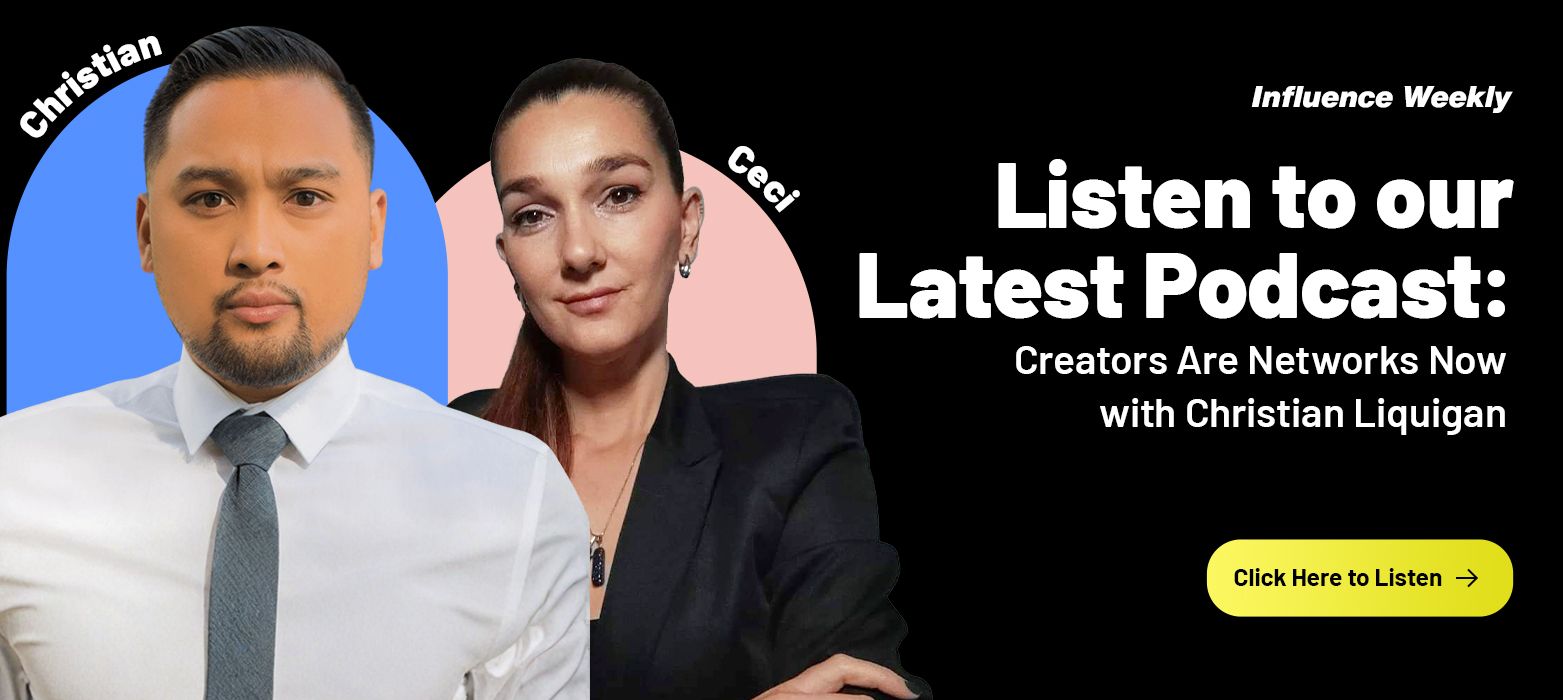
Spotter's Director of Brand Partnerships, Christian Liquigan, joins host Ceci to discuss how brands can move beyond transactional influencer deals toward story-driven creator partnerships that deliver measurable results.
Liquigan outlined what the shift from traditional advertising to creator-led content means for media buyers, including how they allocate budgets and redefine success metrics. He also explained why combining creator capital with brand investment unlocks opportunities neither side can achieve independently. The conversation offers practical guidance for brands looking to leverage Spotter's role connecting top YouTube creators with enterprise partners.
Campaign Insights
Target ended its Creator Program affiliate marketing initiative in April 2026, replacing the commission-based system with a gamified model that compensates creators through gift cards and Target products instead of cash payments. The retailer's affiliate program previously allowed creators to earn monetary commissions from sales generated through their content and promotional links.
The new model eliminates direct financial compensation for creators who drive sales to Target. Instead, the company implemented a points-based system that rewards participating creators with Target merchandise and store credit rather than traditional affiliate commission structures.
The policy change represents a shift away from standard influencer marketing compensation models used across the retail industry. Target's decision removes creators' ability to generate direct income from promoting the retailer's products, potentially affecting creator willingness to feature Target merchandise in their content. The move comes as retailers continue adjusting their creator economy strategies and compensation structures for social media partnerships.
Universal Music Group and Concord Music Group filed a copyright infringement lawsuit against direct-to-consumer fashion retailer Quince on April 16 in the U.S. District Court for the Northern District of California. The suit targets 67 sound recordings and 71 musical compositions allegedly used without authorization in Quince's social media marketing, including songs by Sabrina Carpenter, Billie Eilish, Drake, and ABBA.
Quince, founded in 2018, generates over $1 billion in annual revenue and raised $500 million in March at a $10.1 billion valuation. The company works with approximately 300 creators monthly and relies primarily on influencer marketing for growth.
The music companies first notified Quince of infringement on September 6, 2024. Despite Quince claiming it addressed concerns in November, plaintiffs discovered additional unauthorized uses through March 2026. The complaint alleges some videos were tagged as "Original Audio" despite containing copyrighted music. Plaintiffs seek statutory damages up to $150,000 per work, actual damages, profits, and injunctive relief.
Manychat, a messaging automation platform, hosted a six-hour creator event at SXSW 2026 on March 14 that drew more than 850 attendees and over 1,200 RSVPs. The event at Daydreamer in East Austin exceeded venue capacity, creating lines that extended into neighboring parking lots.
Head of Events Fatima Conteh designed the "Creator Hub | Club" activation with two phases. The Hub ran from 3 to 7 p.m. with creator-led Ask Me Anything sessions and conversation tables focused on reels, monetization, and content strategy. The Club phase from 7 to 9 p.m. featured DJ performances and entertainment.
The event excluded traditional brand pitches and formal partnerships. Instead, brand marketers attended alongside creators without structured product placements or sponsored activations. Reality TV DJ Kyle Cooke performed on a shipping container, drawing additional crowds from neighboring venues.
Molson Coors Beverage Co partnered with influencer and former gymnast Livvy Dunne to front a Miller Lite campaign as part of its 'Legendary Moments' marketing initiative. The collaboration launched with a limited-edition Miller-branded tea set priced at $75, available from April 28.
The novelty tea set includes a teapot designed to hold and pour a 35.5cl beer can through its spout, plus four Miller Lite-branded cups and saucers. Molson Coors said the product was inspired by the "spilling the tea" trend, which has generated over 1.8 million TikTok posts.
Dunne will appear with the brand at festivals including Miller Lite's Social Lite Club experiential space at New Orleans' Jazz & Heritage Festival from April 24 to May 4. The scope and duration of the partnership beyond these initial collaborations were not disclosed.
Visa and TikTok launched the Creator Card, a debit card and business account product for TikTok LIVE creators in the United Kingdom. The card provides faster access to earnings from TikTok's virtual gifting system, where viewers send digital gifts that convert to cash payouts.
Visa commissioned Censuswide to survey 1,000 UK content creators between March and June 2025. The research found 49% reported late payments affected business operations, 41% said cash flow issues forced them to decline opportunities, and 37% experienced stress from payment delays. The survey showed 86% of creator businesses are self-funded and 62% use personal bank accounts for business transactions.
The partnership follows Visa's November 2025 announcement with Karat Financial to pilot AI-powered creator tools in the U.S. in 2026. Mastercard launched competing Business Builder debit and credit cards in February 2025. Visa estimates 200 million creators worldwide, with the sector projected to reach $500 billion by 2027.
Kolr, a marketing intelligence platform operated by iKala Group, released its second quarterly Brand Aura Index measuring influencer marketing performance across Taiwan's luxury and beauty sectors in Q1 2026. The index analyzed over 6 billion data points across major social platforms including Facebook, YouTube, Instagram, and TikTok.
Tod's ranked first in the luxury category, followed by Bottega Veneta and Loro Piana, with Louis Vuitton, Chanel, and Saint Laurent also placing in the top ten. YSL Beauty led the beauty rankings ahead of Chanel Beauty and Gucci Beauty. Taiwan's luxury goods market reached $10 billion in retail value sales in 2025, while beauty and personal care hit $6 billion with projected 5% annual growth through 2030.
The study revealed divergent strategies between established and emerging brands. Premium labels like YSL Beauty built rankings through long-term partnerships with high-profile influencers, while K-beauty brand Dasique scaled awareness using micro-influencers and invested heavily in Threads, where Taiwan represents the platform's second-largest global market.
Unilever's Dove division appointed London-based creative agency PrettyGreen to lead its micro-influencer marketing, content creation, and e-commerce strategy following a four-way competitive pitch. PRWeek and Campaign both reported the brief as seven figures, with TikTok Shop activity included in the remit.
The appointment marks a shift from Dove's previous celebrity-focused campaigns toward conversion-driven micro-influencer activations. PrettyGreen will handle micro-influencer campaigns and TikTok Shop commerce strategy, while Edelman continues managing brand storytelling work including the #ShareTheFirst campaign.
The deal fits Unilever's broader influencer expansion announced in March 2025, when the company said it would increase social and influencer spending from 30% to 50% of total advertising expenditure. Unilever also plans to expand its creator roster by 20 times and activate one influencer per postal code across markets including India's 19,000 zip codes.
Meta launched its first dedicated Instagram brand campaign in Thailand in April 2026, running for 10 weeks through BBH Singapore. The campaign targets millennial and Gen Z users to increase Reels creation through two hero brand films, six 20-second Reels, and 15 creator-led content pieces featuring Thai influencers.
Instagram's user base in Thailand grew to 22.2 million in March 2026 from 18.5 million at the start of 2025. Nearly two in five Gen Z users spend two or more hours daily on Instagram, with over half actively posting photos and Reels.
The campaign addresses competitive pressure from TikTok, which captured nearly two-thirds of Thailand's influencer campaign activity in 2025. Instagram's regional share dropped from 51% in 2023 to under 36% in 2025 across Asia-Pacific markets tracked by AnyMind Group's AnyTag platform.
David's Bridal launched its Style Squad ambassador program in January, bringing together external creators and internal employees to produce shoppable content. The program now has more than 250 ambassadors from about 500 applications, according to company executives who spoke at Shoptalk Spring in March.
The bridal retailer shifted at least one-third of its marketing budget away from traditional editorial shoots toward social-first content, including influencer partnerships. Ambassadors can earn up to 20% commission on sales they drive, with both employees and external creators receiving the same commission structure.
Content from Style Squad ambassadors achieved engagement rates in the high single digits to mid-teens range. The company reviews revenue and creative output daily, removing content that fails to meet benchmarks within roughly a week. David's Bridal plans to feature ambassador-created images on product detail pages alongside traditional photography.
Fashion retailer Quince led podcast advertising spending in March 2026 with $6.57 million, according to data from Magellan AI, which tracks the top 3,000 U.S. podcasts. BetterHelp placed second at $5.86 million, followed by Amazon at $5.80 million, Meta at $5.20 million, and T-Mobile at $4.97 million.
Sports and comedy dominated genre preferences among top spenders. Quince focused primarily on comedy programming, while BetterHelp, Amazon, and T-Mobile targeted sports content. Meta concentrated its efforts on news podcasts.
WebBank recorded the largest month-over-month spending increase at 19,133%, rising to $230,800 from $1,200. Starbucks grew spending by 10,739% to $1.24 million from $11,400. Bill.com increased spend by 2,689% to $1.19 million.
CBS News hired technology journalist Joanna Stern in March 2026 as a correspondent through a partnership model that allows her to build her own business while delivering exclusive content to NBC News. The deal represents a shift where traditional news organizations are signing creators at lower costs than full-time employees.
MS NOW launched a Saturday night show in February featuring hosts from progressive outlet Crooked Media, including former MSNBC anchor Alex Wagner. More than half the viewers were new to the network's Saturday programming, with nearly two-thirds of the 25-54 demographic being new to the timeslot.
Sky Media partnered with digital news outlet Noosphere, which works with journalists including Chuck Todd and Chris Cilizza. Fox News signed a licensing deal with conservative "Ruthless" podcast hosts in July 2025. Piers Morgan's "Uncensored" venture, now led by former MSNBC president Rashida Jones, is seeking $30 million in funding with backing from The Raine Group and Antenna Group.
The Hong Kong Tourism Board invited 1,730 influencers with a combined following exceeding 1.6 billion to the city between 2023 and 2024, according to the Culture, Sports and Tourism Bureau. The board tailored each influencer's itinerary to their home market and target audience.
Notable participants included TikTok's most-followed creator Khaby Lame, who visited in November 2024 for three days. South Korean boy band Seventeen members Mingyu and Vernon visited in September 2024, with Mingyu's subsequent Instagram post receiving 2.5 million likes. American YouTube duo the Stokes Twins, who have 139 million subscribers, produced their first Asia travel vlog featuring Hong Kong locations, which surpassed 58 million views.
The board allocated HK$1.32 billion for 2026-27, with HK$343 million directed toward diversifying visitor source markets and developing tourism offerings for high-value overnight visitors. The board did not break out specific costs for the influencer program as it was incorporated into broader marketing strategy.
Check Out Our Media Kit

Interesting People
Alex Cooper's Unwell Network faced internal turmoil in 2024, with multiple senior executives departing including the head of brand marketing, network head, and chief growth officer. Cooper employs around 100 people, with at least 20 marking themselves as leaving in 2025 and 2026 on LinkedIn.
Staff members complained about Cooper's husband and co-CEO Matt Kaplan's management style, with crew members threatening to walk off film sets and live tours due to his behavior. During filming of "Unwell Winter Games," Kaplan berated staff and threatened their Hollywood careers, causing a crew member to break down in tears.
The network struggled to replicate Call Her Daddy's success, which receives an estimated 13.3 million monthly downloads compared to under 100,000 for most other Unwell shows. Three original programs launched for SiriusXM were canceled within a year. Cooper also publicly feuded with former host Alix Earle, whose show "Hot Mess" was the network's second-biggest program.
Marketing agency Kepler has created a new vice president role to lead social, entertainment, and culture, hiring Kim Garcia to fill it. Based in Los Angeles, Garcia will head Kepler's influencer marketing practice and build out what the agency calls its cultural intelligence capabilities. She brings roughly two decades of experience, most recently running her own strategic consultancy serving creators and brands.
Before that, she served as global CMO at Tagger Media through its acquisition by Sprout Social, and spent seven years at VaynerMedia building its global entertainment division for clients including NBCUniversal and Warner Bros. Discovery. The hire signals growing agency investment in creator-focused strategy as a standalone discipline.
Blackstone president and COO Jonathan Gray leveraged his travel schedule to become a LinkedIn content creator, generating millions of views through jogging videos filmed during business trips. Gray's LinkedIn posts regularly attract 440,000 impressions and average over 100,000 views per video, with one travel montage reaching 5.9 million views.
Gray filmed nearly 50 videos in the past year from locations including Sydney, Amsterdam, Paris, and Bhutan. His snowstorm jogging video from Central Park in January accumulated 2.7 million views. The 56-year-old executive, who oversees $1 trillion in assets at the Fortune 500 company, calls himself an "accidental influencer."
The strategy emerged after formal corporate posts generated limited engagement. Gray's authentic, self-filmed running content requires minimal production costs and legal approval typically takes hours rather than weeks. Blackstone CEO Stephen Schwarzman also creates LinkedIn content for his 400,000 followers and recently collaborated with TikToker Max Klymenko on a video exceeding 4 million views. Since Gray's 2018 COO appointment, Blackstone's assets under management roughly doubled.
Former Beast Industries employee Lorrayne Mavromatis filed a federal lawsuit Wednesday against MrBeast's production company, alleging sexual harassment, wrongful termination, and violation of the Family and Medical Leave Act. Mavromatis served as head of Instagram for the company, which employs 700 people and is based in North Carolina.
The lawsuit claims CEO James Warren, who is MrBeast creator Jimmy Donaldson's cousin, made inappropriate comments about her appearance. Mavromatis alleges she was demoted in January 2024 after filing a harassment complaint with the company's HR department, which was run by Donaldson's mother Sue Parisher. The investigation found her claims "unsubstantiated."
Mavromatis claims she was required to work during maternity leave, including participating in conference calls from the delivery room. She was terminated less than three weeks after returning from leave. Beast Industries denied the allegations through a spokesperson, calling them "deliberate misrepresentations" and stating they have evidence to refute the claims. MrBeast has 475 million YouTube subscribers.
The Sidemen, a seven-member UK YouTube collective with more than 140 million combined subscribers, raised £6.2 million for charity at their 2026 match held April 18 at Wembley Stadium. The fundraising total surpassed the £4.7 million raised at the 2025 edition, making it the highest amount ever raised by the annual exhibition match.
The event drew a sold-out crowd of approximately 90,000 to Wembley Stadium and attracted more than two million concurrent viewers across platforms. Peak concurrent viewership across YouTube, Twitch, and Kick reached approximately 2.26 million, with the official Sidemen YouTube stream accounting for roughly 1.96 million viewers.
Proceeds went to Bright Side and M7 Education, charities linked to the Sidemen group. Tickets, priced between approximately £15 and £35, sold out in roughly 2.5 hours. The YouTube All Stars defeated Sidemen FC 4-1 on penalties after the teams drew 10-10 at full time.
Open World gaming-focused creator marketing company SVP Justin Smith identified outcome misalignment as the primary challenge facing gaming brands' creator marketing efforts. Smith, who joined Open World in March 2026 from Stream Hatchet, said brands fail when internal stakeholders disagree on campaign success metrics before launch, citing Solo Stove's Snoop Dogg campaign as an example of high engagement that led to CMO termination over poor sales results.
Open World, a division of Loaded Holdings that builds SaaS platforms for brands and works on publisher campaigns, advocated for always-on creator programs over single-transaction campaigns. Smith said volume purchases covering three to six months typically produce discounts while eliminating sourcing overhead.
The company structured its approach around three pillars: creator programs managed internally by brands, separate community management for non-creator players, and broader influencer campaigns. Smith noted paid media and influencer teams increasingly operate together, with creator content serving as production source for paid media pipelines.
Industry News
The International Academy of Digital Arts and Sciences announced winners of the 30th Annual Webby Awards, with several creator economy figures receiving recognition. Comedian Druski received a Special Achievement Award for his impact on internet comedy through social media sketches, his "Coulda Been Records" series, and national arena tour.
YouTube duo Colin & Samir won Best Duo or Group in Creator Excellence. Food creator Keith Lee and Toast won both the Webby Award and People's Voice Award for Creator/Influencer Partnership with their "It's the Little Things" campaign. TikToker Zach King won for Entertainment or Meme in the General Creator category.
Brand collaborations dominated several categories. KATSEYE and GAP's "Better in Denim" campaign won Fashion, Beauty & Lifestyle in Branded Entertainment. The NikeSKIMS Spring campaign featuring BLACKPINK's LISA won Launch or Drop in Advertising Campaigns.
ShopMy launched Noir, an invite-only personal shopping service that pairs the platform's highest-spending members with human curators for personalized product recommendations via text. The service is available to ShopMy's gold and black tier members and matches shoppers with curators based on brand preferences and style alignment.
Curators use ShopMy's platform technology to review shopper data including past purchases, saved items, and followed creators before making recommendations. Artificial intelligence assists with data synthesis, but human curators make all final recommendations. Beta testing showed demand centered on event dressing, weddings, black tie occasions, clothing, and home goods.
The service targets traditional influencers as well as editors, buyers, and Substack writers seeking to monetize curation without creating social content. ShopMy raised $70 million in October 2025 at a $1.5 billion valuation in a round led by Avenir. The New York-based company reported over $1 billion in annual platform sales and a network of over 185,000 curators at the time of that funding.
Pew Research Center released a study surveying 1,458 U.S. teens ages 13 to 17 between September and October 2025 that found each platform serves distinct functions in teenagers' daily lives. TikTok emerged as the primary platform for entertainment and discovery, with 96% of teen users citing entertainment as a reason for use and 82% calling it a major reason.
TikTok led in product discovery, with 58% of teen users seeking product reviews or recommendations there, compared to 48% on Instagram and 32% on Snapchat. The platform also attracted 45% of teen users for news consumption versus 39% on Instagram and 26% on Snapchat.
Snapchat functioned primarily as a peer communication tool, with two-thirds of teen users citing keeping up with friends and family as a major reason for use. Daily messaging rates reached 57% on Snapchat, compared to 34% on Instagram and 24% on TikTok.
Instagram occupied a middle position across multiple use cases without leading any category, with 91% of teen users citing entertainment and 84% using it to maintain social connections.
Nas.com, the AI-powered business platform founded by content creator Nas Daily, raised $27 million in Series A funding led by Khosla Ventures on April 20, 2026. Vinod Khosla and Nicole Fraenkel led the round, with participation from 500 Global and angel investors including Shuo Wang of Deel and Stanley Tang of DoorDash.
The platform operates as an all-in-one business system for solopreneurs, generating storefronts, product listings, and marketing campaigns from product photos. Users pay approximately $29 monthly for access to business-building tools including payments, logistics, and automated marketing features.
Nas.com reported 3.5 million members and 350,000 businesses across 150 countries. Annual recurring revenue grew from $1 million to $8 million in 2025, representing five-fold growth. The platform serves 20,000 paying business owners, with over 90% operating as solo entrepreneurs.
The company plans to split funding equally between hiring, AI development, and geographic expansion into the United States, Mexico, and Latin America.
Spotter's Director of Brand Partnerships, Christian Liquigan, outlined how creator marketing has evolved beyond traditional influencer campaigns. Liquigan, who joined Spotter earlier in 2026 after previous roles at TikTok and Captiv8, emphasized that brands now work with creators who operate as media businesses rather than individual content makers.
Liquigan noted that YouTube generated $40 billion in advertising revenue, driven largely by creator content. He argued that brands should shift from one-off campaigns to always-on programming with creator councils of five to ten consistent partners. This approach reduces costs compared to working with hundreds of creators sporadically.
The main challenges brands face include excessive approval processes and treating creators like advertising units rather than content partners. Liquigan predicted the industry will move toward fewer creator relationships with deeper integrations and performance-based deal structures. He recommended brands establish creator councils that function as advisors and develop standardized contracts and faster approval workflows to scale creator programs effectively.
The Overlap, a sports media group co-founded by former Manchester United defender Gary Neville, acquired two YouTube channels owned by soccer content creator Mark Goldbridge in a seven-figure deal announced April 20. The acquisition includes "The United Stand," which has 2.26 million YouTube subscribers and focuses on Manchester United fan content, and "That's Football," covering Premier League topics with 1.46 million subscribers.
The deal encompasses all social media platforms linked to both channels, giving The Overlap approximately 6 million YouTube subscribers across its network. Under new ownership, "The United Stand" will launch two formats featuring former players and journalists, while "That's Football" will rebrand as a daily soccer news and podcast channel.
The Overlap, founded in 2021, produces content including its flagship show "Stick to Football." Global, one of Europe's largest commercial radio companies, acquired a majority stake in The Overlap in January 2026. Neville said this was the "first of hopefully a few more" acquisitions as the group targets 15 to 20 million fans globally.
YouTube launched four updates to its live streaming platform on April 17 aimed at increasing creator earnings and viewer engagement. The platform introduced personal ad-free viewing windows that activate automatically when viewers purchase Super Chats, Super Stickers, or gifts during live streams. This feature only applies to creators with automatic ads enabled.
YouTube also rolled out a system that detects peak Live Chat engagement and pauses ads for all viewers during those moments. The platform expanded its gifts feature to horizontal live streams on mobile across Canada, South Korea, Indonesia, Thailand, Australia, and New Zealand, with plans for additional countries and local holiday-themed gifts.
The company enabled simultaneous vertical and horizontal format broadcasting with unified chat functionality. YouTube cited internal data showing over 30% of U.S. live watch time came from connected TVs in 2025. Additional tools including vertical cropping layouts and multiple stream keys will roll out in coming months.
Separately, YouTube announced U.S. Premium subscription price increases from $13.99 to $15.99 monthly, effective June billing cycles for existing subscribers.
Lee Sung Jin, creator of Netflix anthology series "Beef," discussed Season 2 development and his expanded Hollywood career in an April 2026 New Yorker interview. The second season starred Oscar Isaac, Carey Mulligan, Charles Melton, and Cailee Spaeny in a story centered on class conflicts at a country club.
Jin revealed he secured major cast members before writing scripts, spending hours tailoring dialogue to actors' speech patterns. He wrote additional content for Marvel's 2025 film "Thunderbolts" and was hired to write an upcoming "X-Men" movie with "Beef" writer Joanna Calo for director Jake Schreier.
The creator changed his professional name from Sonny Lee to Lee Sung Jin in 2018-2019 to embrace his Korean identity after experiencing workplace discrimination. He drew inspiration for Season 2 from visiting Korea's elite circles while directing a music video for BTS member RM. Jin noted that class themes became central to the show's narrative, reflecting what he called "all-gas, no-brakes capitalism" in contemporary society.
Kick reached 100 million users but co-founder Bijan Tehrani admitted the streaming platform launched with flawed infrastructure. Tehrani said Kick rushed to market with weak technology and spent three years rebuilding while operating. The company ended expensive creator contracts that prioritized short-term growth over content quality.
Kick captured 12% of the live streaming market in 2025 with 4.5 billion hours watched, a 131% increase year-over-year, according to Stream Hatchet. The platform ranked third behind Twitch at 52% and YouTube Gaming at 24%. Unique channel count grew 68% to 1.8 million creators.
Tehrani said the company removed thousands of accounts from its partner program for viewbotting and deleted millions of fake accounts. Kick deployed a discovery algorithm to 10% of users to prioritize authentic engagement. The platform offers creators a 95/5 subscription revenue split compared to Twitch's 50/50 split. Tehrani and co-founder Eddie Craven invested close to $1 billion in the platform.
Coachella 2026 demonstrated how the music festival has evolved into a content creation hub where attendees across income levels adopt influencer behavior. The festival's transformation reflects broader changes in how live entertainment operates as social media marketing venues.
Brand activations dominated the weekend experience. Hailey Bieber's Rhode World event provided free Patrón drinks and photo opportunities, while Paris Hilton's Parívie skin care company hosted poolside parties with branded merchandise. Revolve Festival, an invite-only influencer event, featured performances by Kehlani, Mustard and Don Toliver alongside mechanical bulls sponsored by dating app Seeking.
Festival costs reached premium levels with $500+ tickets and luxury food options including $150 caviar hand rolls at the Red Bull Mirage party's Nobu popup. Glamping packages offered air-conditioned yurts with golf cart transportation and spa access.
Rob Dellibovi, CEO of RDB Hospitality Group, noted that having influencers at events can generate billions of marketing impressions, helping festivals sell future tickets. However, public backlash against influencer culture intensified, with viral social media posts criticizing the displays of wealth and complaints about Airbnb scams affecting attendees.
Snap laid off 1,000 employees, representing 16% of its global workforce, CEO Evan Spiegel announced in April 2026. The company also closed 300 open positions from its total headcount of 5,260 full-time employees as of December 2025.
Spiegel cited artificial intelligence efficiency gains as part of the restructuring rationale, stating AI deployments across Snapchat+, advertising platforms, and Snap Lite infrastructure enabled smaller teams to produce results. The cuts are projected to reduce annualized costs by more than $500 million by the second half of 2026.
Snap estimated pre-tax charges of $95 million to $130 million, primarily from severance and contract termination costs. Affected U.S. employees received four months severance, healthcare coverage, and equity vesting. The company reported Q1 2026 revenue of $1.529 billion, up 12% year-over-year, and Snapchat reached 946 million monthly active users in Q4 2025.
Meta announced plans to lay off approximately 8,000 employees on May 20, representing 10% of its global workforce of 79,000. The company prepared additional layoffs for the second half of 2026, with earlier reports suggesting total cuts could reach 20% of staff across multiple waves.
CEO Mark Zuckerberg drove the restructuring to accelerate artificial intelligence investments, with Meta's annual capital expenditures projected to exceed $100 billion. The company moved engineers into a new Applied AI unit focused on developing autonomous AI agents and reorganized teams within Reality Labs while establishing a Meta Small Business unit.
The layoffs followed broader tech sector reductions, with Amazon cutting 30,000 corporate employees and Block eliminating nearly half its staff in February. Industry tracker Layoffs.fyi recorded 73,212 tech job losses in 2026 compared to 153,000 in all of 2024. Meta reported over $200 billion in revenue and $60 billion in profit for 2025.
Registration Required
A marketing agency promoted rock band Geese by flooding TikTok with videos from accounts created by the agency, according to a WIRED report and Billboard podcast interview. The agency's founders detailed their strategy of using sock puppet accounts to post song clips across the platform.
The practice reflects the growing "clipping" economy, where agencies pay people to post short clips from longer content. One clipping agency's Discord channel showed varied payment rates: $65 per 100,000 TikTok views for a comedy special, $150 per 100,000 views for a podcast on Rumble, and $75 per 100,000 for a finance YouTuber's content.
The strategy proved effective in audience metrics. An analysis of tech news livestream TBPN, which OpenAI purchased, showed livestreams averaged 7,000 viewers while clips averaged 257,000 views. The clipping approach has extended beyond music to traditional media including TV and movies, making it harder for audiences to distinguish organic popularity from paid promotion campaigns.
Podcasting's aggressive video pivot is fracturing its audience. YouTube now ranks as the largest podcast platform in the U.S., with Spotify, Apple Podcasts, and Netflix all accelerating video integration. The shift is driving discovery and growing audiences, with shows like "Let's Get Haunted" reporting audience surges after adding video.
But audio-only listeners are increasingly alienated as hosts reference visuals without explanation, forcing some to drop shows entirely. The tension is a creator monetization problem: video unlocks YouTube ad revenue and short-form social clips, but risks alienating the commuter and multitasker base that built podcast audiences. For creators, the strategic question is whether optimizing for video discovery justifies eroding the audio experience that defines the format.
Tradwife influencer Nara Smith signed a cookbook deal with HarperCollins, marking her expansion beyond social media into mainstream retail. Smith's "Homemade" cookbook will contain 85 recipes and launch October 13, 2026, with distribution through Target and Walmart.
Smith has accumulated 17.2 million combined social media followers since 2023. Her previous brand partnerships included collaborations with Reformation for clothing, Erewhon for a smoothie, and Algae Cooking Club for a $28 garlic algae cooking oil.
The tradwife content category has gained commercial traction across multiple platforms. Penguin Random House published "Yesteryear" by Caro Claire Burke in April 2026, a novel about a tradwife influencer that reached number two on the New York Times bestseller list. Anne Hathaway's production company acquired film rights.
Fellow tradwife influencer Hannah Neeleman operates a Utah farm business employing approximately 100 people. Her brick-and-mortar store opening in July 2025 created parking shortages and doubled nearby bookstore sales, according to local business owners.
QVC Group filed for bankruptcy last week to shed $5 billion in debt, marking a dramatic fall for the network that essentially invented the influencer economy b…QVC Group filed for bankruptcy last week to shed $5 billion in debt, marking a dramatic fall for the network that essentially invented the influencer economy before the term existed.
Decades before affiliate links and livestream shopping, QVC proved a skilled on-camera personality could sell almost anything to a home-bound audience craving connection. The irony: that insight now powers the entire creator commerce ecosystem, from Amazon Live to TikTok Shop, leaving QVC unable to compete with the industry it pioneered. Younger shoppers never came, e-commerce competition intensified, and linear TV viewership collapsed.
Livestreamer N3on, whose real name is Mikyle Rafiq, revealed he earns several hundred thousand dollars monthly from streaming platform Kick, where he has 500,000 followers. The 21-year-old receives up to $3,000 per hour through Kick's Partner Program based on audience size and engagement. He also maintains sponsorship deals with crypto casino Gamdom, messaging app Telegram, and creator platform Ch@mobile.
Rafiq disclosed spending over $1.4 million in five weeks paying 303 "clippers" who create viral short-form content from his streams. He operates a network of approximately 1,000 clippers, paying $40 per 100,000 views or $50 for priority content. Some individual clippers earn over $100,000 monthly from his content.
The streamer moved from Amazon's Twitch to Australia-based Kick, which launched in 2022 and offers creators a 95/5 revenue split compared to Twitch's 50/50 default. Kick, owned by crypto gambling site Stake.com operators, maintains lighter content moderation policies that appeal to controversial streamers seeking less restrictive platforms.
Alex Cooper's Unwell Network is facing significant internal turbulence, with three senior executives departing in the past year and staff complaints about co-CEO Matt Kaplan's conduct on set and at live events. Beyond the personnel issues, the network has struggled to build programming beyond Call Her Daddy, which draws an estimated 13.3 million monthly downloads while most Unwell shows stay under 100,000.
Three original SiriusXM programs launched in 2025 were all canceled within a year. Cooper has now shifted strategy from building original shows to acquiring existing ones, entering a competitive market against better-resourced buyers. The company recently hired a new president and executive producer to stabilize operations. Cooper's ad agency and live events are growing, with the agency now generating revenue nearly equal to podcasting.
Coachella has evolved into a primary influencer marketing event, with brands offering creators compensation packages ranging from free merchandise to mid-five-figure fees. Talent management firm Innovo reported its five Coachella clients received 39 event invitations, 23 gifting packages, 19 music promotion deals, and seven on-site collaborations for the 2026 festival.
Creator compensation typically includes free festival tickets, luxury accommodations, gifted clothing, and flat fees between $1,000 and mid-five figures. Content creator Jillian Webber, who has over 4 million TikTok followers, partnered with SeatGeek and Revolve for the event. Many creators accept below-market rates for access to networking opportunities.
Brands invested heavily in Coachella activations, with Rhode Skin and Revolve each generating approximately $5 million in estimated earned media value from creator posts during the first weekend. Other brands including e.l.f. Cosmetics, Medicube, and 818 Tequila earned between $2 million and $2.5 million in estimated earned media value, according to CreatorIQ data.
New York City schools are deploying creator economy tactics to compete for a shrinking pool of students. With the under-20 population down roughly 155,000 between 2020 and 2023, charter networks are running TikTok and YouTube campaigns, partnering with day care centers, and enlisting current families as brand ambassadors. Coney Island Prep budgets $80,000 annually for social and digital ads.
A new South Bronx charter school plans to spend $200,000 on marketing before opening, including thousands monthly on social media. Success Academy is using TikTok to reposition its brand. New York City spent at least $21 million on a public school ad campaign under the prior administration. For creator economy professionals, the trend represents a new and growing vertical for platform advertising and influencer-style community recruitment.